A salvage title check runs a car's vehicle identification number (VIN) against state title, insurance and auction records to show whether it was ever branded salvage or rebuilt, and 13.7% of the 294,600,609 passenger vehicles in the EpicVIN database carry a salvage title. Enter the 17 characters above to see the brand, the total-loss record behind it and the salvage-auction photos, where an auction took them, before you agree on a price.
Where
to find the VIN?
Looking for the VIN?
Here is where you'll find it:
On the driver’s side dashboard near the windshield
Salvage and rebuilt brands from every reporting state. A pass through 70 databases, the National Motor Vehicle Title Information System (NMVTIS) included, pulls the title brands that motor vehicle agencies across the United States, insurers and salvage yards filed for the car.
The damage behind the brand. 22.0% of passenger vehicles in our database have been through a salvage auction, and the report shows the auction photos with the damage estimate where an auction took them.
One timeline instead of a label. Each title event carries its date, state and odometer reading, so you see when the salvage brand appeared and whether a rebuilt brand followed.
Data from an approved NMVTIS data provider. EpicVIN is on the list of approved NMVTIS data providers at VehicleHistory.gov, the U.S. Department of Justice site for NMVTIS, and buyers rate it 4.50 out of 5.
What Is a Salvage Title?
A salvage title is a title brand, the label a state prints on a car's title to record its condition, issued when an insurance company declares the vehicle a total loss or the damage passes a limit set by state law. That limit is a share of the car's actual cash value, its market value just before the damage: 60% in Oklahoma, 75% in New York, 100% in Texas and Colorado, while other states apply a total loss formula that adds the salvage value to the cost of repairs. Salvage rules are state regulations, not federal law, so the same repair bill can total a car in one state and leave it with a clean title in the next.
Collision, flood, fire and hail are the usual causes. Theft recovery is the odd one out: when motor vehicle theft ends in a total-loss payout and the car turns up later, the insurer owns a salvage car that may have no damage at all. Among EpicVIN records that note a damage type, collision accounts for 85.6% and water or flood for 2.1%. A salvage car is unroadworthy: most states will not register it for public roads until a shop repairs it and it passes a state inspection. Once a state brands it, the brand stays a permanent part of the vehicle's NMVTIS record, even when a later title elsewhere leaves it off. For the buyer's side of the question, read What Is a Salvage Title Car and Should I Buy One?
Key Terms on This Page
Clean title: a title with no brand. It says nothing about damage a shop fixed without an insurance total loss.
Title washing: re-titling a branded car in a state that does not carry the brand over. It is a form of title fraud, and NMVTIS exists as a consumer protection against it.
Junk or non-repairable: a brand for a car that may only go to parts or scrap and can never return to the road.
Salvage vs Rebuilt Title: What Each Brand Means
A salvage title means something made the car unroadworthy. A rebuilt title means it has been made roadworthy again: the car was repaired and passed the state inspection that lets it back on public roads. Neither brand means the car is safe, reliable or repaired correctly.
Salvage title
Rebuilt title
What happened
Declared a total loss or damaged past the state limit
Was salvage, then repaired and inspected
Road use
Not roadworthy; no registration in most states
Can be registered and driven
Inspection
None passed yet
Passed the state inspection for rebuilt cars
Insurance and loans
Usually no road coverage until rebuilt
Some insurers and lenders limit or decline coverage
Resale value
Kelley Blue Book rule of thumb: 20% to 40% below the Blue Book value for a salvaged or reconstructed title
Same rule of thumb, and the brand stays for life
Proof of a good repair
No
No
The difference between them in the used car market is price and paperwork; in our records it is also scale. For every 100 salvage-titled passenger vehicles, about 1.5 have a brand recorded as rebuilt: 0.21% of the 294,600,609 cars against 13.7%. A rebuilt listing is the rarer case, and the repair behind it is the part nobody has verified for you yet. More on the second brand: what a rebuilt title means.
Source: EpicVIN Vehicle Data Research · 294,600,609 passenger vehicles · Data as of August 2026
Kia shows 0.86 rebuilt titles per 100 salvage titles and Honda 1.80, the widest gap among the ten largest makes. Fleet age moves the salvage numbers more than the badge does: makes whose cars average 14 or more years went through a salvage auction 33.0% of the time, against 17.6% for makes under 10 years.
How to Check if a Car Has a Salvage Title
Step 1. Find the VIN
The 17-character code sits on a plate on the dashboard near the windshield on the driver's side, on the sticker in the driver's door jamb, and on the title and registration. All of them should match. A mismatch is a reason to stop.
Step 2. Check the Title Status on Paper
Ask to see the title itself, not a photo of it. The state prints any brand on its face: Salvage, Rebuilt or its own wording. A clean paper title from one state is exactly where title washing hides, so treat it as a first clue.
Step 3. Run the Salvage Title Check by VIN
Enter the VIN above. The free VIN check decodes the year, make, model and engine and shows how many records exist. The full vehicle history report then opens the brand history from NMVTIS, insurance total-loss records, salvage-auction photos and theft records from the National Insurance Crime Bureau (NICB), along with any accident history on file.
Step 4. Read the Dates Together
Look at the order of events: a damage record, then a salvage auction, then a new title in a different state a few months later. That sequence is the pattern of a washed title. Put it next to the seller's story and the listing.
Three free or public sources answer part of the salvage question, and each one stops at a different point. NMVTIS data includes brands, the latest odometer reading, insurer total-loss reports and salvage-yard records, yet the federal system holds no repair history.
Question
NICB VINCheck
State DMV (Department of Motor Vehicles) title status
NMVTIS report
EpicVIN report
Salvage record
From participating insurers only
That state's title only
Brands from all reporting states
NMVTIS brands plus insurer total-loss records
Rebuilt brand
Not shown
That state only
Shown
Shown with its date and state
What the damage looked like
Not shown
Not shown
Not shown
Auction photos and damage estimate
Sale prices and listings
Not shown
Not shown
Not shown
Past listings with prices
Odometer
Not shown
Varies by state
Latest reading
Reading at each title event
Cost
Free, 5 searches per 24 hours
Varies by state
Sold by approved providers
3-day trial for $1
The free tools tell you whether a salvage record exists somewhere. NICB itself says VINCheck is not a comprehensive vehicle history report and warns buyers not to rely on it, because it skips law enforcement records and insurers that do not take part. Paid vehicle history reports add what no free tool carries, and with EpicVIN, that is the story behind the brand: how the car looked at the salvage auction, what it sold for there and every title that followed.
That story is what lets you judge a car priced below its clean-title value. EpicVIN holds more than 350 million VIN records and runs each query through 70 databases, and the NICB VINCheck page itself lists EpicVIN as a source for fuller history. A single trial covers more than one car, so you can compare before you drive out to see any of them.
Before You Buy a Used Car: Quick Checklist
Car buying with a salvage or rebuilt brand goes wrong in the same few places, and these buying tips cover them in order.
Match the VIN on the dashboard, door jamb, title, registration and listing.
Read the brand on the paper title and compare it with the report.
Ask why the car was totaled, then check the answer against the auction photos.
Look for frame repair, airbag warnings and uneven panel gaps; for water damage, run a flood damage check.
Ask for repair receipts, parts invoices and the state inspection paperwork for the rebuilt brand.
Call your insurer and lender with the VIN before you pay.
Book a pre-purchase inspection with an independent mechanic or body shop.
Pre-Purchase Inspection: The Other Half of a Salvage Title Check
A pre-purchase inspection is the best way to make sure you are buying a vehicle that has been inspected and repaired to a roadworthy standard. The title check is just one part of the equation. The federal NMVTIS consumer disclaimer says it plainly: a vehicle history report is not a substitute for an independent vehicle inspection, and NMVTIS holds no detailed repair history.
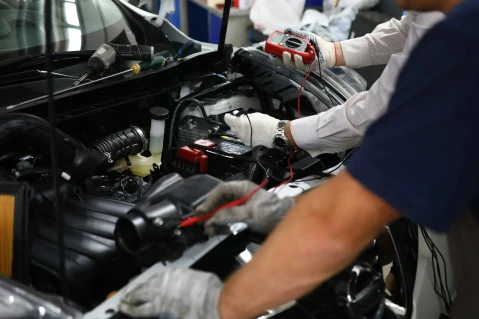
On a salvage or rebuilt car, ask the shop to put it on a lift. Welds or replaced sections on the frame rails come first. Then check for overspray on rubber seals and bolts, the airbag warning light at start-up, silt or rust under the carpet and a musty trunk. The airbag light should come on and go out.
Uneven tire wear points to a bent suspension. A body shop that works on rebuild projects can also hold the repair up against the damage in the auction photos. If the seller refuses an inspection, that refusal is your answer.
Run an EpicVIN Salvage Title Check Before You Buy
A used car can look clean on the lot and still carry a salvage brand from another state. The quickest way to protect yourself is to check before the test drive, not after the deposit. Enter the VIN above, or open a sample vehicle history report first: the sample report shows how title brands, auction records and odometer readings appear on a real car. Checking several cars? Report packages cover more than one VIN.
Yes, partly: NICB VINCheck shows salvage records from participating insurers at no charge, and most state DMVs show the current title status in their own state. The free VIN check on this page decodes the car and counts its records, while the brands from every reporting state and the auction photos are in the full report.
The VIN itself does not: its characters encode the manufacturer, model, engine and plant, not what happened to the car. It is the key to the records, and a check by VIN pulls the salvage brand from NMVTIS and insurer reports.
For driving, yes: a rebuilt car has passed the state inspection and can be registered, while a salvage car cannot. For the quality of the repair, neither title tells you anything, so the inspection still decides.
Only as a repair project or a parts car, since it stays off public roads until it passes the state inspection. A rebuilt car is worth buying only at a rebuilt price, with the auction photos, repair receipts and an independent inspection telling the same story.
Run the VIN above: the report lists the salvage brand, the date and state of the rebuilt brand and the odometer at each title event. Then ask the seller for the paperwork from the state inspection that cleared the car for the road.
Similar Articles
Discover expert tips, news and advice on buying and maintaining used vehicles
Learn everything there is to know about your next car.
We use cookies
. If you continue to browse it means you agree to the use of cookies. Learn more and change cookie settings
.
Choose your country or region
Switch to Global?
This version of EpicVIN isn't adapted for your region — Global. Data coverage and some features may not work as expected, and your experience may be worse. We recommend staying on your regional version.