
Decoding Porsche options by VIN shows you exactly what equipment the car left the factory with, including all packages, performance features, tech systems, colors, and interior specs, and helps you confirm whether a seller’s claims are accurate. The VIN itself provides model and identity details, while the build sheet tied to that VIN reveals the full option list. Together, they let you verify authenticity, detect missing or aftermarket features, avoid overpaying, and stay compliant with state disclosure rules when buying a used Porsche.
What a Porsche VIN Can and Cannot Reveal About Factory Options
A Porsche VIN is the unique vehicle identification number that links your Porsche to plant information and basic specifications. It can confirm body type (SUV, sedan, or coupé), intended market value, and a rough year range, plus clues to the code pattern. A Porsche VIN location is easily accessible at the base of the windshield, and it should match the one on the door label.
VIN is 17 characters long in an ISO standard format; each character may be a digit or letter, and one position is a check digit that can be zero. It was introduced for the Porsche model range, and the Porsche model year 1981 is a useful dividing line for older imports. For plant options, treat the VIN as a pointer, not the full option list.
| VIN position | What it points to | Quick buyer takeaway |
| First 3 characters | Manufacturer/region | Confirms origin |
| Next 5 characters | Descriptor set | Hints at body/drivetrain specification |
| 5 and 6 | Sub-descriptor | Helps match brochures |
| Position 7 | Series/restraint detail | Helps cross-reference safety items |
| 8 and 12 | Validation/plant | Helps spot typos |
Why the Build Sheet Exists and Why VIN Alone Isn’t Enough
A VIN tells you “what it is,” but not always “what it has.” Porsche stores options as an internal code list, and some entries are packages that hide several items. Equipment can vary by region, so two similar listings may have different content even with the same badge.
The build sheet is Porsche’s itemized build list for that exact Porsche, covering interior trim, the driver's and passenger airbag layout, plus software-enabled functions - so you can prove pricey equipment that’s hard to spot.
Reasons VIN-only decoding isn’t enough:
- Packages can bundle items under one code name.
- Dealer accessories won’t appear in plant records.
- Records for the older 944 and 968 examples can be patchy online.
How to Get the Porsche Build Sheet
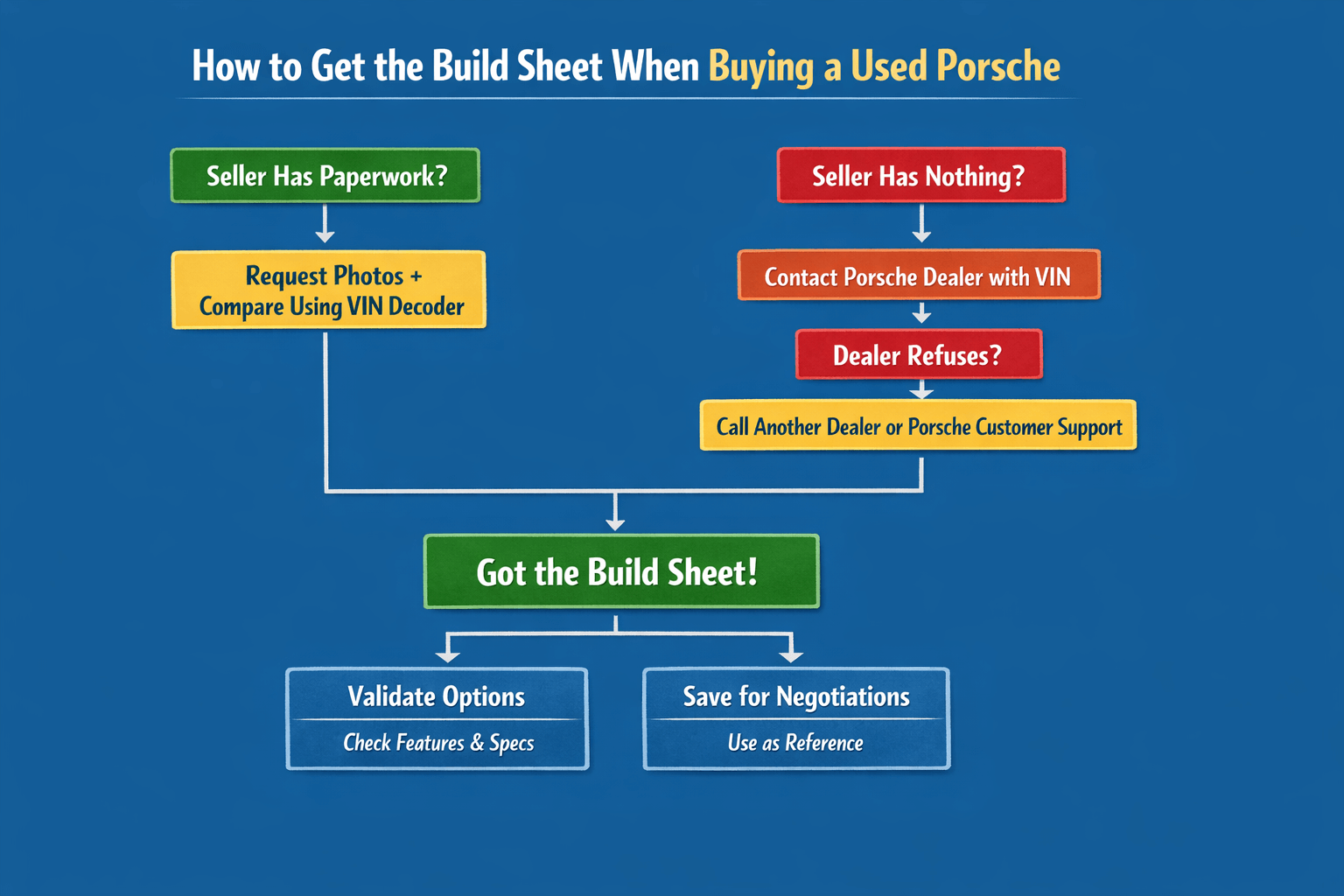
Ask the seller first; many owners keep the option sticker photo with service papers. If it’s missing, a dealer can often pull details using the VIN number. Pair the build sheet with a vehicle history report to compare dates, mileage, and prior region changes. If you want to find rare equipment, ask for the full option list, not a short summary.
How to obtain it in practice:
- Request the option sticker or original invoice (photo preferred).
- Call a dealer and ask what they need to release the option details.
- Use a VIN lookup to get a baseline list, then compare it to the dealer printout.
- Save the seller’s messages and receipts as additional information.
Understanding Complex Porsche Option Codes
Porsche options are stored as short identifiers that map to features, bundles, or compliance rules. A single code may mean one item, while another triggers a package that changes wiring, modules, or cooling. The same identifier can shift meaning across model years, so tie it to the exact version and build date.
Some items are obvious in an image, but software functions may not show until you test them.
| Identifier type | What it usually represents | What to verify on the Porsche |
| Single-option code | One upgrade | Parts, menus, behavior |
| Package code | Several items together | Full package content |
| Approval tag | Region compliance | Papers and destination |
| Production sequence | Build routing | Recalls and parts |
How to Decode Porsche Options by VIN (Step-by-Step Process)
Treat VIN information as a start, then prove it with documents and inspection. Confirm the string is consistent across plates and labels, then pull plant details and compare them to what you can touch and test. This is where the chassis number, serial number, and paperwork all need to line up.
Follow this process:
- Photograph the VIN; confirm each digit and character.
- Identify the base model code, engine, and transmission.
- Request the build sheet; translate each option into equipment.
- Inspect seats, brakes, lights, and software screens.
- Log findings in a table with one row per listing.
How Porsche Option Pricing Works
Porsche costs stack: base MSRP plus packages and stand-alone options. The key is knowing which choices change usability, running costs, and market price over time. Because Porsche lets buyers customize nearly every functional system, suspension, steering, transmission, lighting, seats, tech, two cars with the same model year can carry dramatically different original sticker prices.
Trim-Level Equipment vs Paid Options
A trim level on a car sets the baseline equipment, but Porsche still allows heavy customization above it. Standard equipment can look “loaded” in photos, so don’t assume. Two similar listings can feel completely different once options are added.
| Equipment area | Typical base content | Common paid options |
| Comfort | Standard seats/climate | Ventilation, memory, leather |
| Handling | Base suspension | Adaptive dampers, rear steer |
| Tech | Standard audio/assist | Premium audio, camera aids |
| Exterior | Standard paint/wheels | Special colors, larger wheels |
How MSRP Is Affected by Packages
Packages can raise MSRP in ways that aren’t obvious from a short listing. Some are hardware-heavy, while others are mostly software. One bundle can also force another. Always compare packages with what you’ll actually use.
Package impacts to watch:
- More electronics that can increase diagnosis time during repair.
- Better customer appeal in your local area.
Identifying Fake or Aftermarket Options Through VIN Reports
VIN reviews help catch options that are claimed but not supported by factory details. Porsche provides official guidance on identifying genuine OEM equipment through its Tequipment and Genuine Parts documentation. Use these resources to understand what factory-installed components should look like and how they’re marked. Compare the results with what you can verify in person. Treat each option as a feature to prove, not a story to accept. Be extra strict on “easy add-on” items.
| Claimed item | What VINs can confirm | What you should inspect |
| Sport Chrono | Present/not present as a code | Clock pod, drive-mode switch, menus |
| Tow prep | Often listed when factory-manufactured | Harness, modules, and a cooling option |
| Lighting upgrade | Sometimes grouped in a package | Lens markings and control modules |
Using VIN Data for Side-by-Side Comparison Shopping
Use VIN outputs to compare similar listings in a consistent way. This is where light analytics helps: you translate options into the same fields across each listing. Focus on items that change how it drives or what it costs to own.
Use these habits:
- Compare performance hardware first (brakes, suspension, cooling).
- Confirm assist content across the same year range.
- Do a final search for part numbers if something looks off.
How Porsche Options Affect Long-Term Ownership
Options affect running costs, comfort, and resale appeal. A rare color tied to a Porsche paint code can be harder to match after a scratch, and larger wheels can raise tire and alignment costs. If you keep the Porsche long term, choose options that match your daily use and climate, and keep service records and cost information for future customers.
Legal Considerations When Evaluating Porsche Options
Option claims can become legal issues when they affect costs, financing, or insurance. In many places, what’s advertised can be treated as part of the sale terms, so save screenshots and messages. The Federal Trade Commission provides clear rules on deceptive or misleading claims in automotive sales. Get it in writing. A Porsche VIN decoder printout can support your position if equipment is mislisted.
Protect yourself with these steps:
- Confirm the title matches the stamped identifiers.
- Ask for written confirmation of high-value packages.
- Keep copies of the ad, photos, and seller statements.
- If details don’t match, renegotiate or walk away.
- Learn cross-border rules if it was first sold in Canada.
Real Buyer Scenarios: How VIN Option Data Changes Decisions
When option information conflicts with a listing, it can stop customers from overpaying for upgrades that were never ordered from the factory. These mismatches usually reveal missing high-value features, like PASM, Sport Chrono, ventilated seats, or premium lighting, that sellers often assume are included.
Avoiding Hidden Costs on Cayenne Options
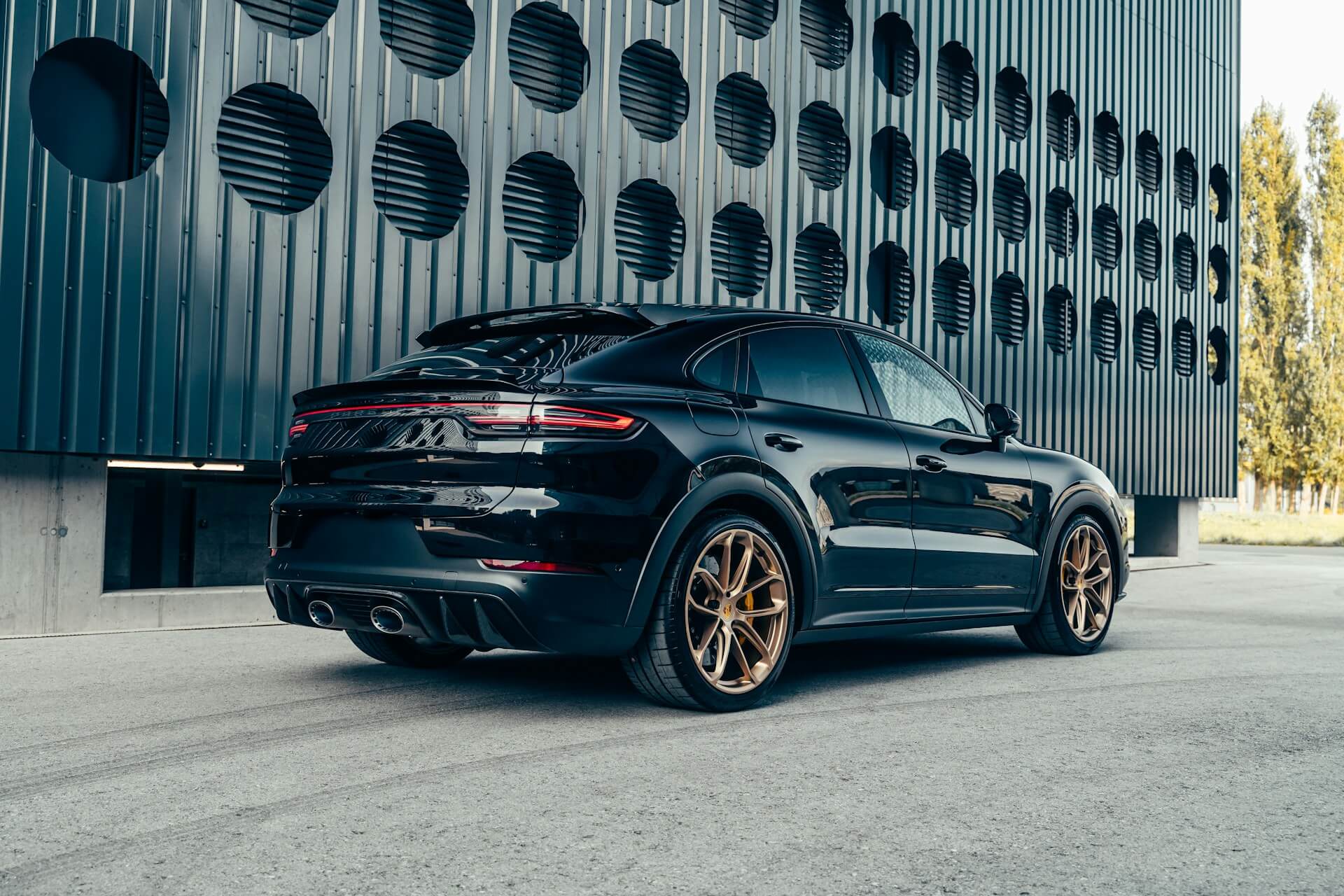
Cayenne options like air suspension, rear steering, and advanced driver aids can be great, but they add systems that may need calibration and expensive parts later. If your build sheet shows complex packages, budget for sensors, compressors, and alignment. If you won’t use the tech, buy simpler.
Making Sense of Macan Technical Packages

Macan technical packages often blend hardware and software, so read the package list line by line. Porsche publishes official technical specifications and option-code definitions for each model year, which can help you confirm what each package actually includes. Pay attention to:
- Adaptive suspension vs standard dampers.
- Lighting, camera, and parking systems.
- Sport vs comfort seats, based on your fit.
- Extra charging and connectivity modules.
Verifying Panamera’s Option Legitimacy Before Purchase
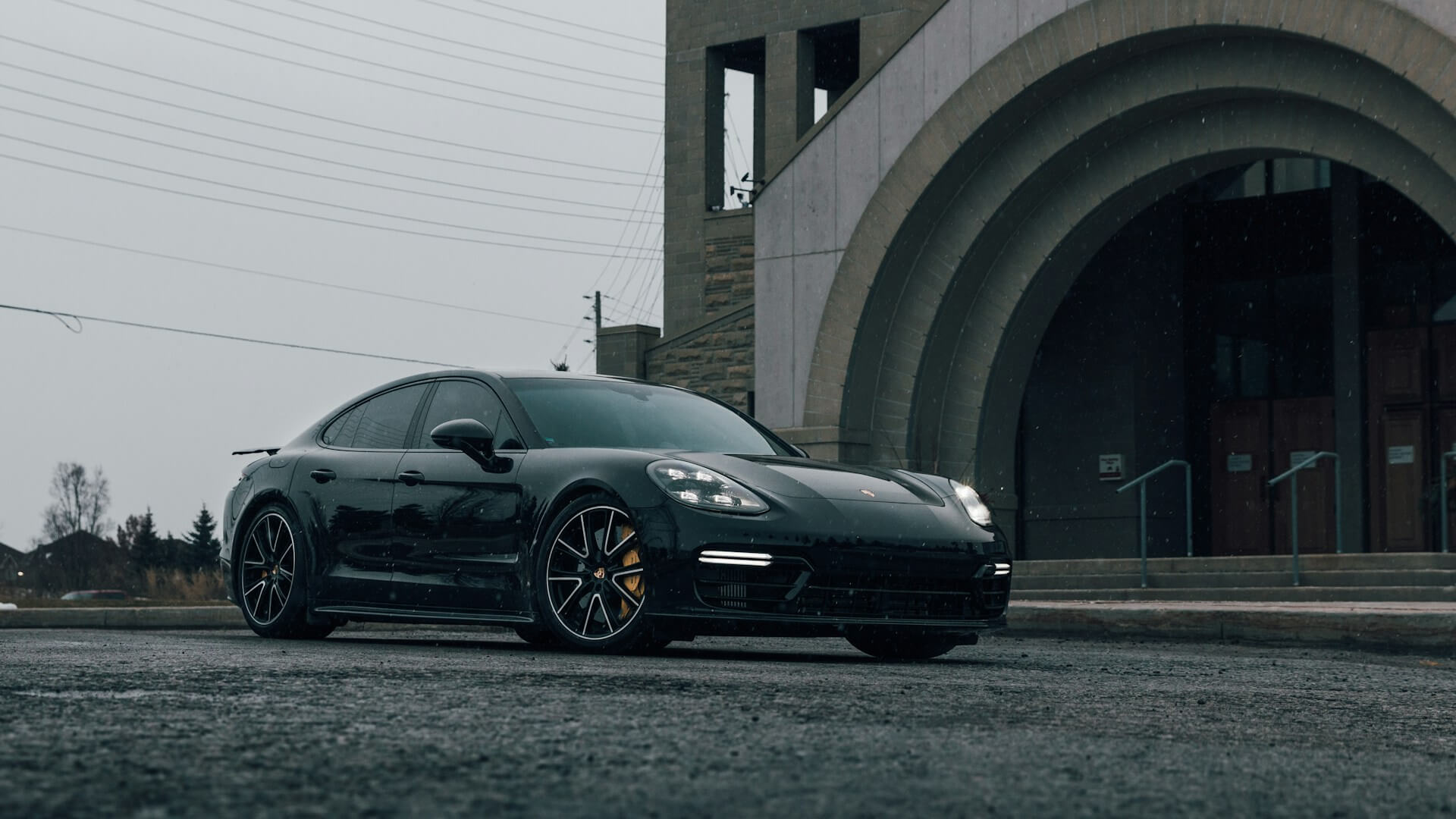
Panamera ads often use vague labels like “executive” or “premium,” so verify each item on the build sheet, then test it. Confirm screens, seat functions, and rear controls, and make sure wiring hasn’t been removed. If a major system is missing, you may face expensive replacement and coding work.
How Sellers Misrepresent Porsche Options
Across Porsche cars, option confusion is usually copy-paste, not outright fraud. Sellers may assume a visible upgrade is factory, or they may mix up year-to-year content. In older examples, swaps are common, and records vary.
A common pattern is mixing parts between a 944 and a 968, then describing the result as factory. Your best defense is documentation plus an inspection of part labels and modules.
| Misrepresentation type | What you might see | Best response |
| “Fully loaded” | No proof, only claims | Ask for the build sheet and invoices |
| Aftermarket as factory | New trim or badges | Compare the option record and parts |
| Wrong year content | Options from another year | Verify against the correct year guides |
| Package confusion | One item present | Confirm full package content |
Summary
- A VIN alone cannot show Porsche factory options. Always confirm the full configuration using the official build sheet.
- Verify every option the seller claims by comparing the listing to the build sheet. Any mismatch is a pricing lever or a warning sign.
- Key Porsche options like PASM, PDK, and Sport Chrono meaningfully affect performance, maintenance needs, and future resale.
- Use VIN-decoded option lists to compare vehicles side by side so you can see true equipment differences and justify pricing.
- Watch for red flags that indicate misrepresented or aftermarket options, especially on high-value performance features.
- Check your state’s disclosure rules and rely on the build sheet as your primary proof document in case of disputes.
- Use VIN and option data to understand long-term ownership factors such as maintenance costs, upgrade compatibility, and resale strength.
Frequently Asked Questions
Sometimes. A VIN decoder can confirm the base version identity, but a deleted rear badge is cosmetic and may not be listed as a unique option. Use the build sheet and photos to verify what was ordered.
Exact totals are hard to prove, but you can narrow the number:
- Note the manufacturing serial range for your model year.
- Compare VINs from registries and clubs.
- Record the Porsche vehicle identification string and compare ranges.
Yes. Porsche can retire a code, rename a package, or change content when suppliers or regulations shift. That’s why you should rely on the build sheet for that specific Porsche, not a generic list.
Yes. Certified listings can still contain data-entry errors or confusing package names, especially on tech packages and comfort bundles. Use the build sheet and an in-person inspection to confirm expensive systems before you sign.
If they refuse, treat it as a risk and adjust your approach for that Porsche vehicle:
- Ask to view the window sticker, invoice, or dealer printout.
- Reduce your offer to reflect unknown equipment.
- Walk away if the total sum assumes options you can’t prove.
- Look for another listing with clearer paperwork.