
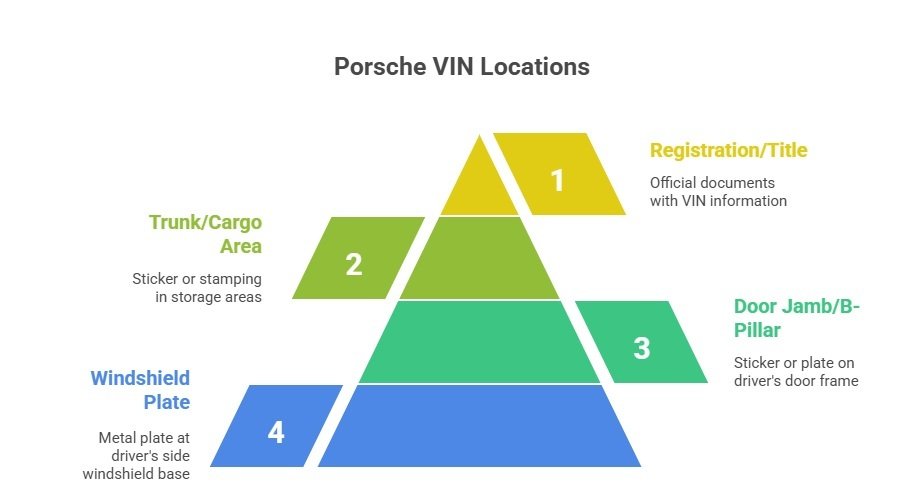
On most Porsche models, you can find the VIN number in three main places:
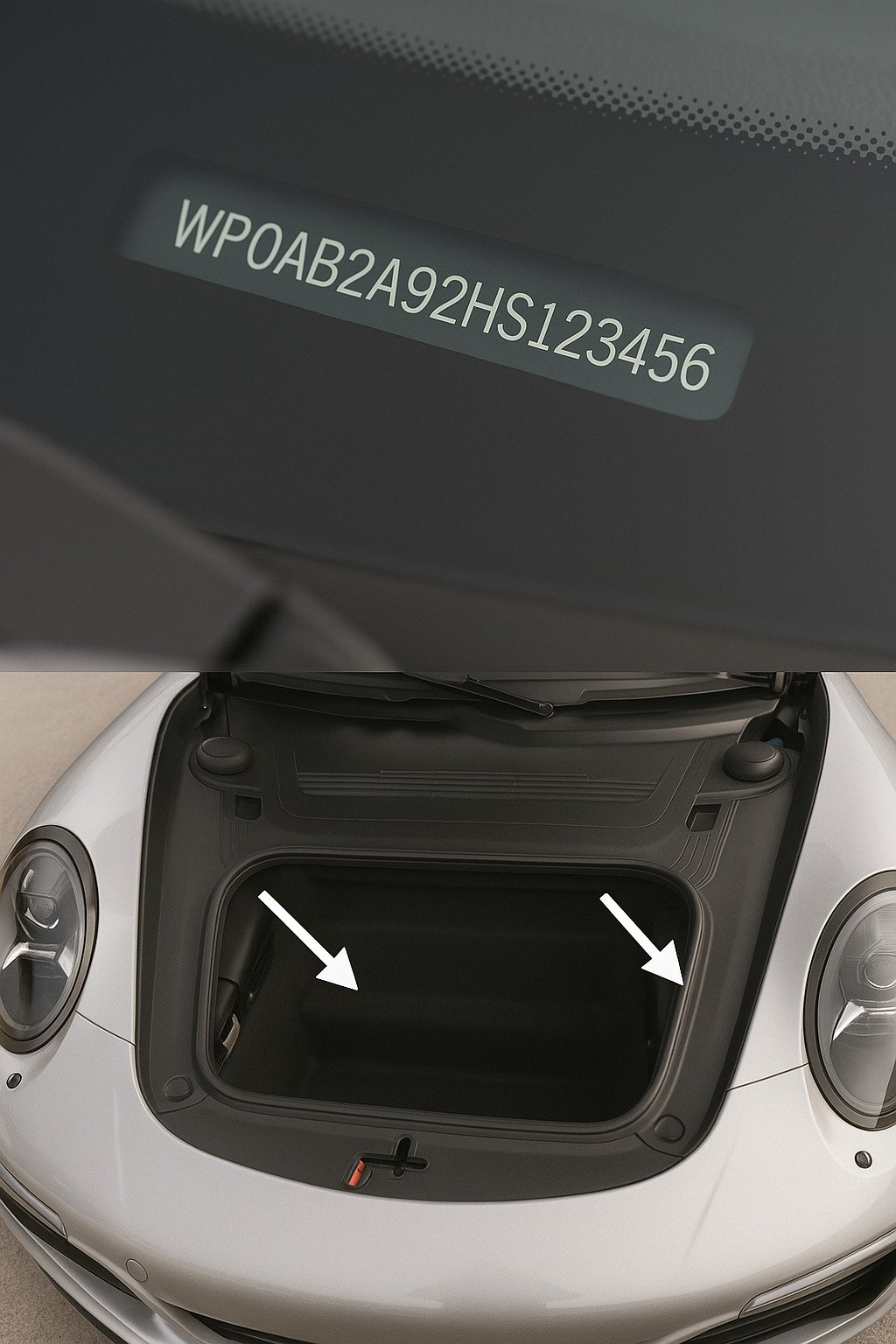
- On a metal plate at the base of the driver’s side windshield;
- On a sticker or plate on the driver’s door jamb/B-pillar;
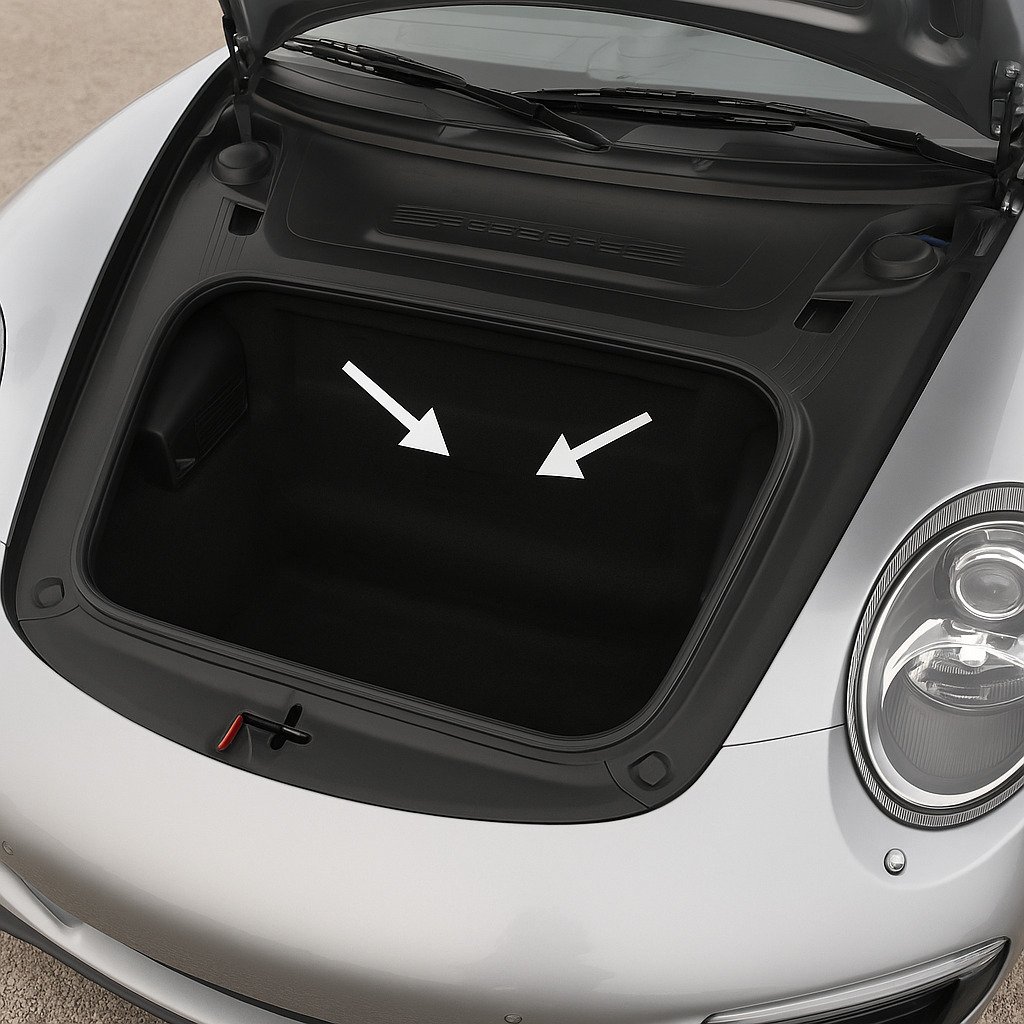
- On a sticker or stamping in the front trunk (“frunk”) or rear cargo area, as well as on the registration and title.
These locations are consistent across most 911, Cayenne, Macan, Taycan and other Porsche models.
Using a check vin number free helps you turn that number into meaningful data about the vehicle.
What a Porsche VIN Number Is (and Why Its Location Matters)
- A VIN (vehicle identification number) is a global 17-character identifier. It's been used since 1981. Earlier cars often utilized 5, 6, or 8-digit chassis numbers. VIN sections are: WMI (World Manufacturers Identification), VDS (Vehicle Description Section), and VIS (Vehicle Identification Section).
- Typical Porsche prefixes: WP0 for cars, WP1 for SUVs.
- “VIN number” and “chassis number” are often used in the same way, but older cars can have separate, shorter chassis numbers.
On US-market models built after 1981, the VIN must be visible through the windshield and permanently attached to the body shell. Altering/removing/replacing VIN plates without proper authorization is illegal. See NHTSA guidance and Porsche recall lookup for safety-related recall reviews.
Verifying the title and brand confirms legal ownership, lien status, and that the make/model truly match. An unusual or malformed sequence can signal tampering, cloning, or simple data-entry errors.
How does a VIN number look? It has 17 characters, letters, and digits except I, O, and Q.
Sample VIN: WP0AA2A91SS207157.
There’s also an 8-digit Porsche Code in the configurator/My Porsche for pairing or saving builds; it is not the VIN, and we’ll revisit it in the tools section. See the Porsche Car Configurator and Porsche Connect Store for official services.
Where is the VIN number on a Porsche? (Most Models)
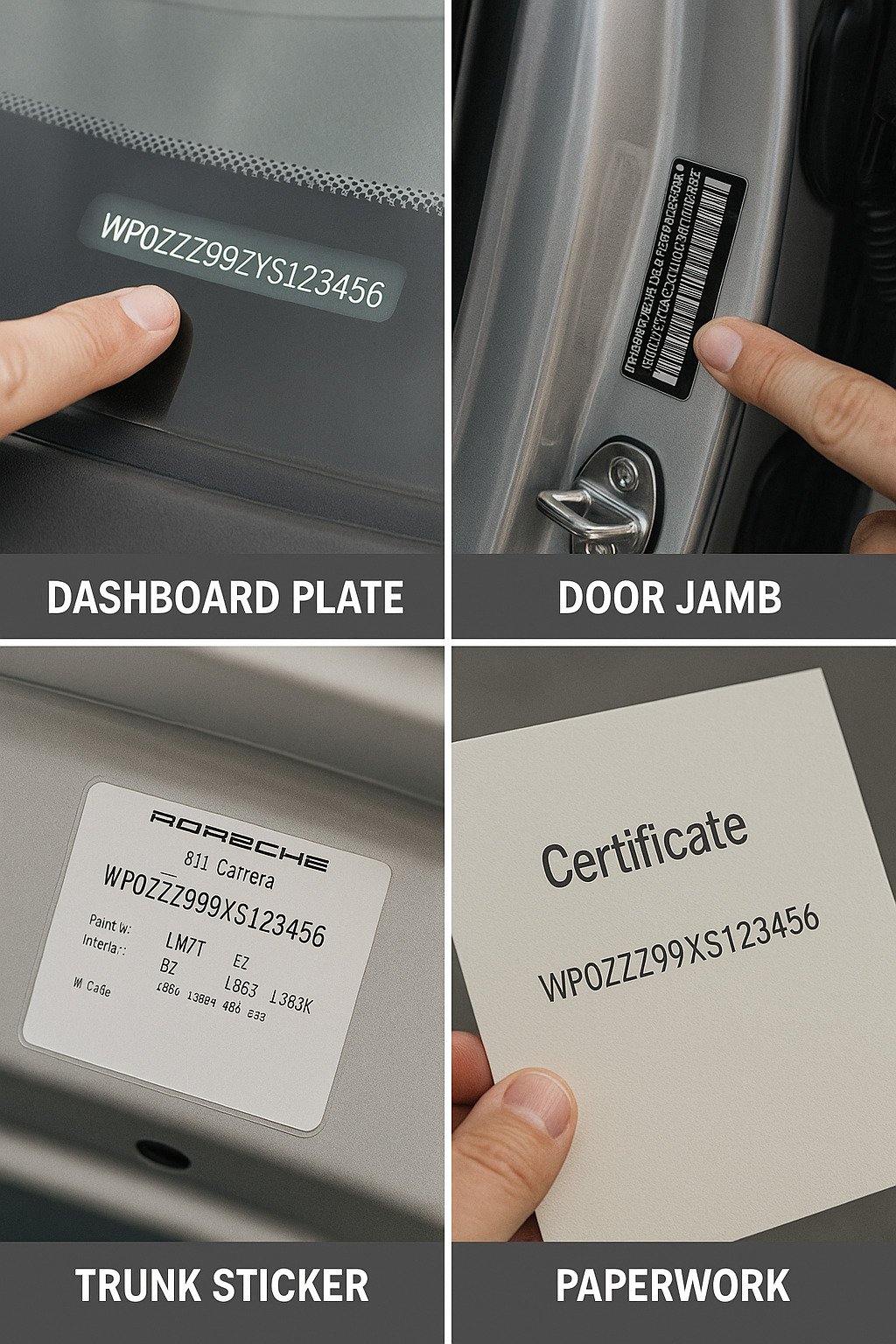
- Metal plate at the base of the driver’s side windshield on the dashboard.
- Door jamb/B-pillar sticker or plate.
- Sticker in the frunk or rear cargo area on SUVs and EVs.
- VIN on registration, title, insurance, and option/build stickers in the service book or under the hood on older cars.
1. Dashboard / Windshield VIN Plate
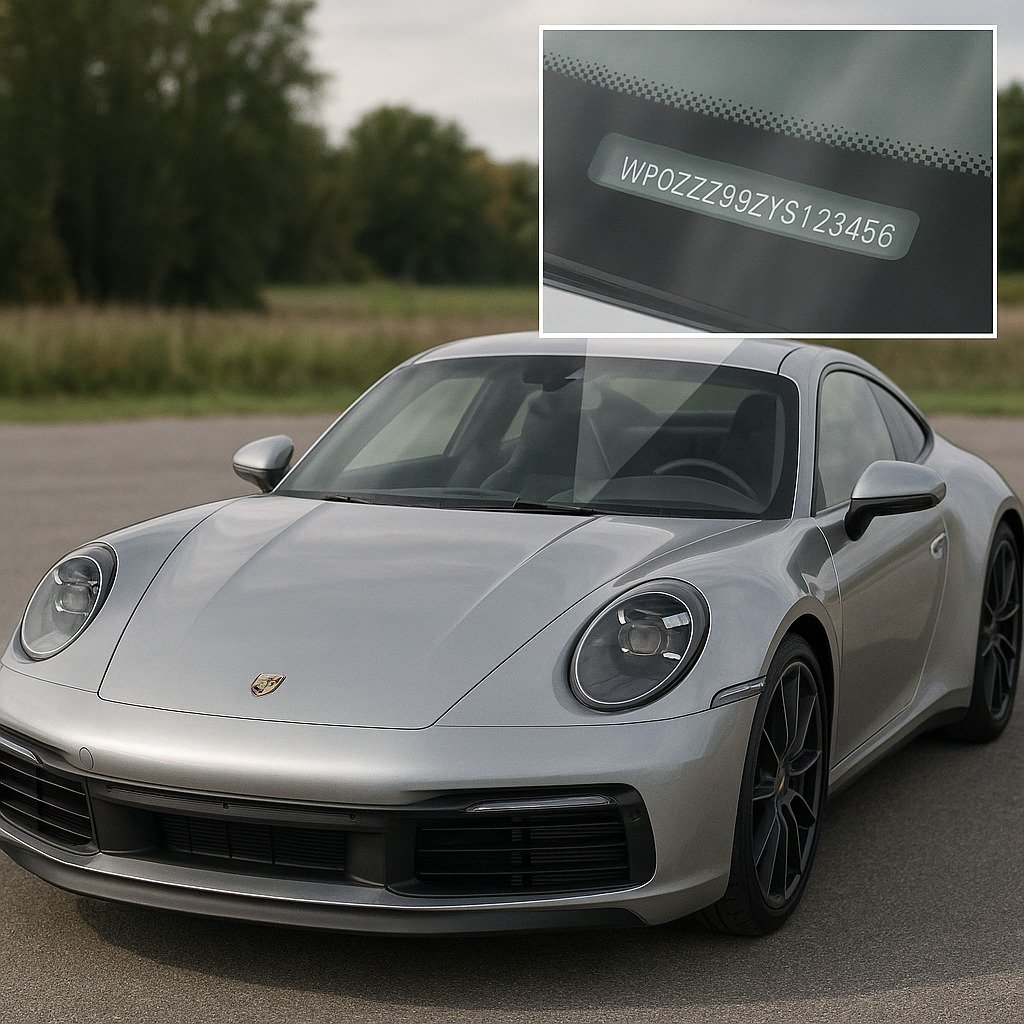
- Stand outside at the lower driver’s corner where the dash meets the glass.
- Clean the area; for hard reading, use polarized light and a flashlight at a shallow angle.
- Some imported cars may lack this plate; review special cases later.
2. Door Jamb & B-Pillar VIN Stickers
Open the driver’s door and look at the vertical B-pillar near the latch. The label lists the VIN plus weight data. Sometimes it sits on the door edge or hinge side. Do not confuse the VIN/weight label with tyre pressure or service labels.
⚠️ Damaged or missing stickers deserve a careful review. On Macan and Cayenne, this B-pillar label is commonly the clearest tag if the windshield post reflection makes interpretation hard.
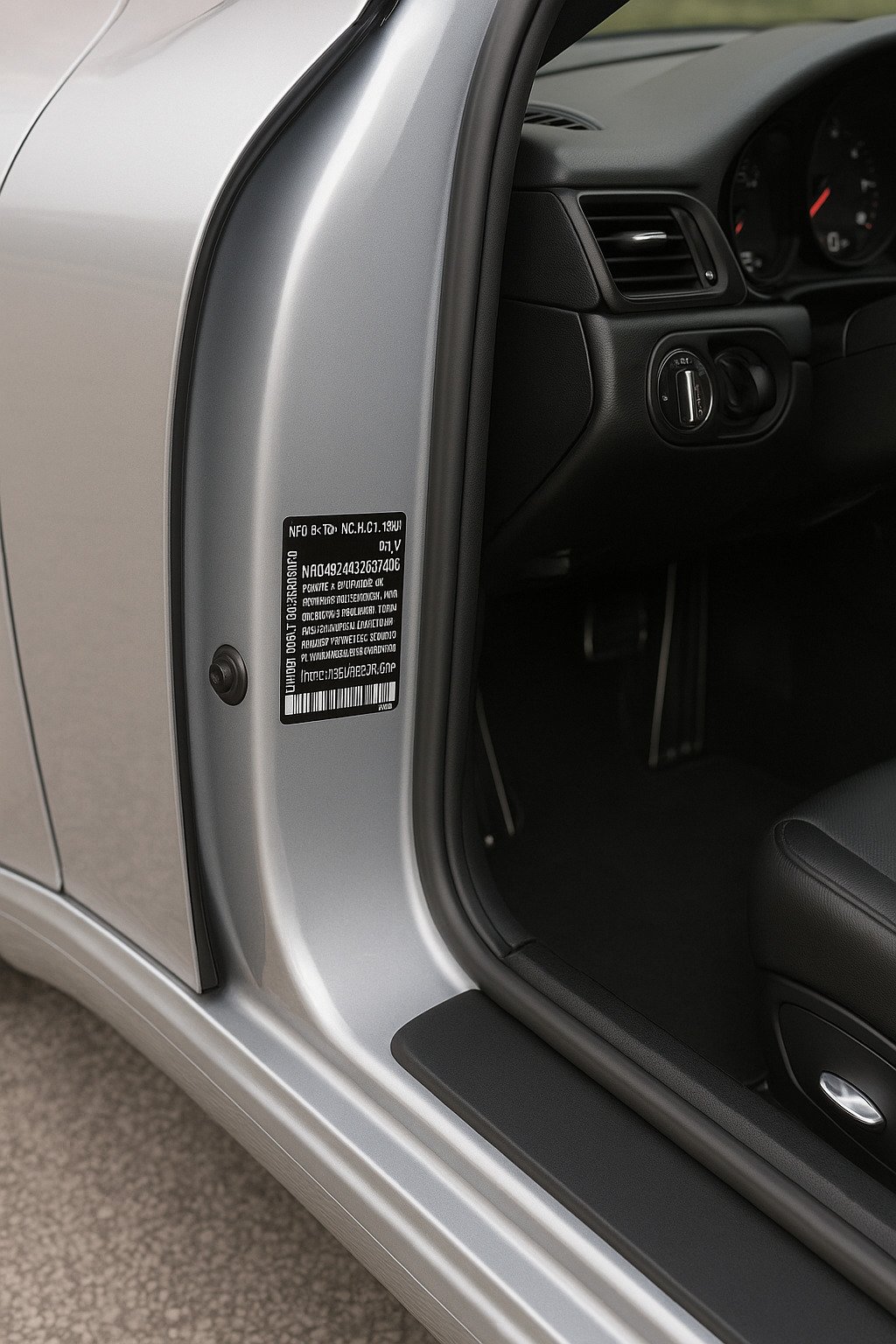
3. Front Trunk/Engine Bay/Cargo Area VIN Points
- For 911/Boxster/Cayman, lift the frunk carpet near the hood latch. Examine the fuel tank area for a stamping or plate.
- For SUVs (Cayenne, Macan) and Taycan, look for a VIN or data sticker in the rear cargo jamb. Also, find a plate on the inner panels of the frunk.
Hidden stamped VINs are covered later in detail.
4. Vehicle Documents & Digital VIN Records
Your VIN must appear on registration/title, insurance, sales invoice, and often service records. Owners can order a Porsche Production Specification by VIN via official channels like Porsche Vehicle Documentation / PPS.
Checklist:
✅ Documents match plates (registration, title, insurance).
✅ Characters align across the windshield plate, B-pillar label, frunk/cargo sticker, and paperwork.
✅ Names match the car’s current owner/seller.
Porsche VIN Location by Model
Exact placement differs by family and generation, though patterns repeat. Below are typical VIN locations broken down by Porsche model families.
Porsche 911 VIN Number Location (996, 997, 991, 992)
The VIN number on a Porsche 911 (all generations) is located at the windshield base, in the frunk stamping, and on the driver’s B-pillar label.
The Porsche 911 VIN place follows a consistent pattern:
- Dash plate at the windshield base.
- Stamped or plated sequences in the frunk floor under the carpet near the hood latch or fuel tank area.
- B-pillar/door jamb label.
For 991.2, owners report the windshield VIN plus extra labels on the front bonnet edge and in the engine bay.
Air-Cooled Porsche 911/912/930/964/993 VIN & Chassis Number Locations
The chassis/VIN number on an air-cooled Porsche 911/912/930/964/993 sits in the trunk area stamping and on plates.
- Early 911/912: Aluminium plate in the frunk between the smugglers’ box and gas tank, plus a sign beneath the plate on the chassis. Door jamb plate with weights and the same digits.
- 930/964/993: Stamped tab in the frunk near the fuel tank/crossmember. Driver’s door jamb labels; small panel stickers on some cars.
Porsche Cayenne VIN Location (All Generations)
Primary spots:
- Windshield plate at the driver’s side.
- Driver’s door jamb/B-pillar label.
- Label in the engine bay or rear cargo jamb; exact placement varies by model year and plant.
Porsche Macan VIN Number Location
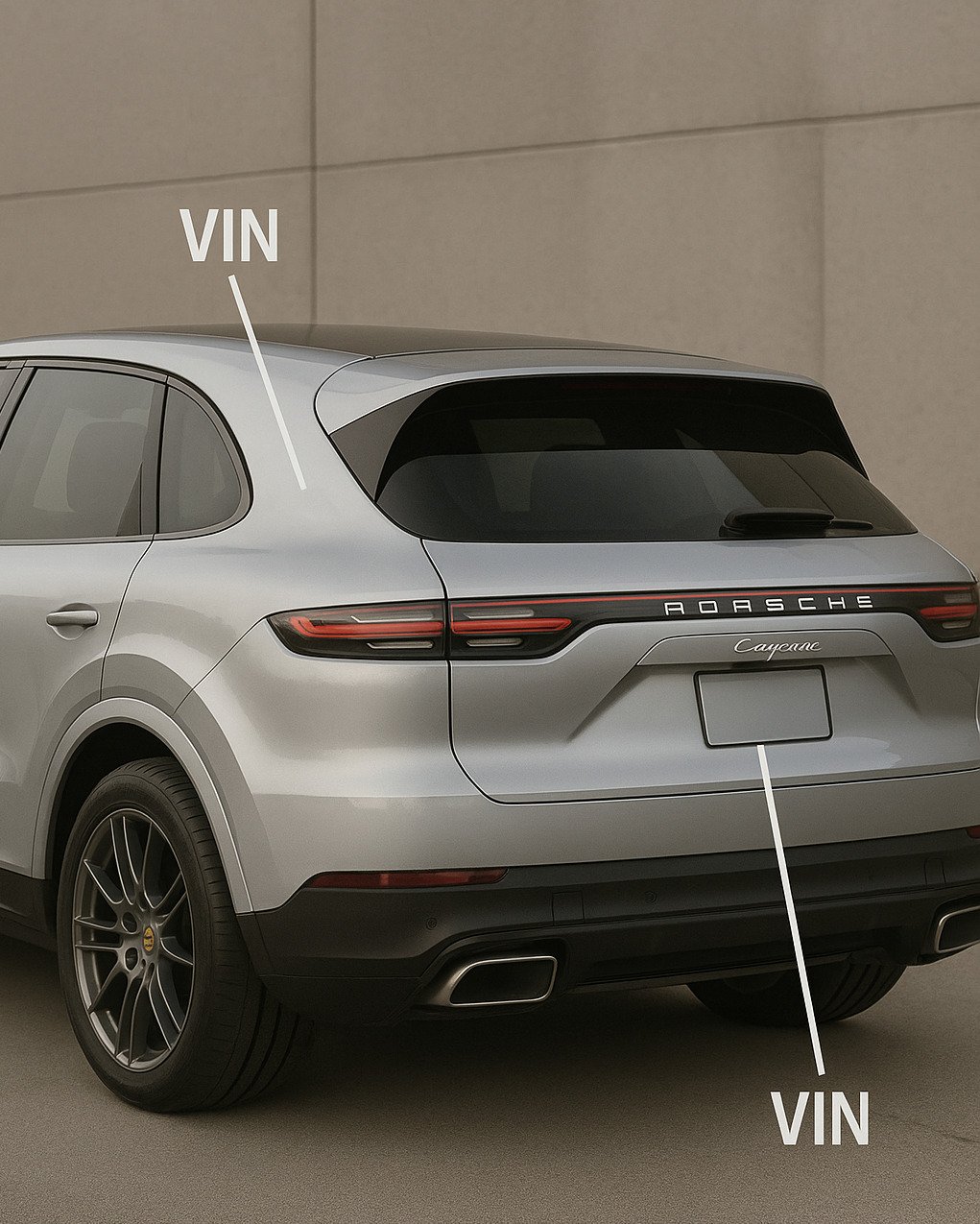
Where to look for:
- Behind the windshield on the driver’s dash.
- Plate on the right or driver’s B-pillar, depending on the market.
- Some cars include a stamped label under the front footwell trim.
Porsche Taycan VIN Location
Reported labels:
- Windshield corner visible outside.
- Driver’s pillar label near the latch.
- Extra label on the hinge side.
- Some markets add a frunk data sticker.
⚠️ The hard-stamped chassis VIN is typically within the front structure. Review a workshop manual or dealer data because placement may vary on EVs.
Other Porsche Models (718, Panamera, 356, 914, 924/944/968, 959, 928, & Specials)
For the 718 Boxster/Cayman and the Panamera, you’ll see the sequence on the driver’s-side windshield plate. Also, review the driver’s B-pillar label and a sticker in the frunk/rear trunk.
Porsche 718 Boxster/Cayman VIN
- Windshield plate on the driver’s side.
- Driver’s door jamb/B-pillar sticker.
- Data sticker in the frunk under the carpet or on the side panel.
Porsche Panamera VIN
- Windshield plate at the driver’s side lower corner.
- Driver’s B-pillar label.
- Data sticker in the rear trunk area (under the floor panel or on inner panels, depending on model year/market).
Other models
- 914: Windshield post tag and an additional label in the front luggage compartment on the right front wheel well (passenger side)/right headlamp housing.
- 924/944/968 and early 356: Classic plate plus body stampings per manuals and registries.
- Special/race: Extra labels can appear; verify with factory documentation for rare cases.
Hidden VINs, Panel Stickers, and Anti-Fraud Checks
Primary visible IDs are the easy tags you spot fast: the windshield plate, the driver’s B-pillar/door-jamb label, and a sticker in the frunk or rear cargo area.
Hidden or secondary IDs are factory labels on protected body parts or bolt-on panels to perform a theft check and deter cloning.
These secondary points help you spot tampering, confirm every digit, and verify that the shell and major parts are original. If anything doesn’t line up, pause the deal and book an independent Porsche-experienced inspection that analyzes all VIN places and panel stickers. Use VIN lookup tools to check for stolen car alerts or export flags
Factory-Stamped VIN and Partial Numbers on the Shell
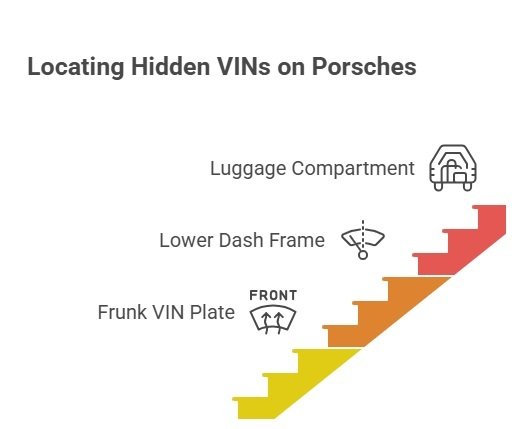
Typical hidden VIN locations on Porsches:
- Under the frunk VIN plate, directly on the chassis metal.
- Partial numbers on the lower dash frame behind the kneepad/radio for some years.
- Additional tags in the luggage compartment on older convertibles.
⚠️ Fresh welds, grinding, or oddly new paint around a label are warning signs. Don’t grind, sand, or repaint stamped VIN areas yourself to keep evidence. If something looks wrong, document it and talk to a professional.
VIN Stickers on Bolt-On Panels (Hood, Fenders, Bumpers, Doors)
Under the hood, the plate and labels sit on the bonnet edge or inner panels. Panel stickers are often on the hood, doors, fenders, bumpers, and sometimes the engine lid or rockers. On a 991.2, inspect the underside of the hood and inside the front fenders for labels. Watch for mismatched paint or missing stickers after a front-end incident.
Original panels show the full sequence. Factory replacement parts often display a replacement mark, not the full digits.
How to Use VIN Locations to Check for Accident Damage or Cloned Cars
To look for all places on a Porsche and check for accident damage or cloned cars, follow the above routine and review the car thoroughly.
Checklist:
✅ Photograph the windshield sign, B-pillar label, and the frunk or cargo sticker.
✅ Lift the frunk carpet and look for a hard label on the chassis near the latch or tank area.
✅ Open both doors and inspect inner fenders and door edges for panel stickers or replacement marks.
✅ Compare every digit across all tags, then match them to registration and service records.
✅ Use angled light for easier reading; clean glass and shine a flashlight along the dashboard.
✅ Look underneath for fresh welds, ground metal, or uneven seam sealer.
✅ If anything doesn’t line up, pause the deal and arrange a Porsche-savvy PPI (pre-purchase inspection) plus a dealer PIWIS (Porsche Integrated Workshop Information System) scan. Together, a PPI and dealer PIWIS scan confirm module VINs, option codes, fault history, and possible hidden damage.
| ✅ Good sign | ❌ Bad sign |
| Windshield plate is clean and readable; digits match paperwork | Plate missing, loose, or covered in fresh sealant/paint |
| Driver’s B-pillar label intact; fonts align with factory style | B-pillar label under clearcoat or misaligned; wrong font/spacing |
| Frunk chassis stamp crisp with even depth | Frunk labels looks re-stamped; grind marks or welds nearby |
| Panel stickers are consistent across the hood, doors, and fenders | Stickers are missing; “replacement” marks are everywhere |
| All digits match across tags, service book, and registration | Any digit off anywhere, or conflicting build sheet entries |
| Seam sealer and spot welds look uniform near stamped areas | Fresh sealer, overspray, or waviness around structural points |
| Module scan (dealer/PIWIS) shows the same sequence as the plates | Control-module sequence differs from plates/stickers |
| Reasonable patina for age and model year | Brand-new labels on an older vehicle without explanation |
Special Cases: Imported and Track-Prepared Porsche VIN Locations
Imports and builds don’t always follow US retail patterns. Some primary tags move, and some are removed in preparation for track use.
Imported Porsches Without a Windshield VIN Tag
Many RoW (Rest of World) cars share the same scheme but may omit the windshield tag. Start with:
- Frunk stamping.
- Inner fender tab.
- B-pillar label.
- Service book.
- Factory documentation.
Heavily Modified/Track-Prepped Porsches with Stripped Interiors
What usually disappears: carpet stickers, trim labels, and sometimes the dash top. Focus on non-removable structural stampings - frunk floor label, inner fender tabs, under-dash stampings - and any surviving door jamb plates. For serious mismatches, pause the purchase.
Online Tools and Porsche VIN Lookup Sources
If you only have time for two checks:
- Official Porsche / dealer build data (PPS, Classic Technical Certificate, or a PIWIS printout). Use Porsche Vehicle Documentation / PPS.
- One solid third-party history report (EpicVIN, Carfax, or similar).
There isn’t one public master list of every Porsche VIN, including special models. However, you can stitch together a solid picture using the sources below.
- Official Porsche Vehicle Documentation (PPS/Classic Technical Certificate - https://www.porsche.com/usa/accessoriesandservice/porscheservice/) - Paid factory records ordered online; great for confirming options, colors, production details, and how the car left the line. Not a history report, and some older eras have gaps.
- My Porsche/Configurator (8-digit code) - Free owner portal to link your car, reload a saved build, and manage services. Helpful to confirm a configuration matches the car. However, the 8-digit code isn’t a VIN. It won’t validate history. Log in via the Porsche Configurator (https://models.porsche.com/en-US/model-start).
- Dealer systems (PIWIS 3, DMS) - Dealer-only tools that read the VIN from control modules, print build sheets, and show warranty/recall campaigns. Requires a paid service visit. No nationwide accident history, but it’s perfect for technical accuracy. Open technical specifications (https://newsroom.porsche.com/en_US/media-resources/technical-specifications.html).
- Third-party reports (EpicVIN, VINInspect, Carfax) - Paid reports that decode builds and surface title/accident/odometer rollback events. EpicVIN is especially practical for shoppers because, when available, it also surfaces past auction photos and sale listings. Use EpicVIN first for quick visuals and timelines, then cross-check details against official records.
- Community registries (Rennlist, PorscheRegister.com, owner spreadsheets) - Free, enthusiast-maintained lists that help spot patterns on limited series and option combos. Excellent for background on rare cars, but unofficial and sometimes dated - treat as supporting evidence.
- NHTSA VIN recall lookup (US - https://www.nhtsa.gov/recalls) - Free, official check for open recalls and safety campaigns; perfect as a first pass after you read the dash plate. It won’t show build data or ownership history. Run it here: NHTSA Recalls
Best practice:
- Use the free NHTSA lookup to check open recalls.
- Order an official Porsche Production Specification or Classic Technical Certificate for build data.
- Run a paid history report (e.g., EpicVIN, Carfax) for title issues, mileage inconsistency, and accident events.
Common VIN Lookup Problems and Fixes
| Symptom | Likely cause | Suggested fix |
| VIN returns the wrong model/market | RoW “ZZZ” pattern parsed by a US-centric decoder; market/body code misread | If it’s a RoW “ZZZ” sequence, use a decoder that supports international formats and correctly reads market/body codes. Try two or three tools, including a Porsche-focused decoder; don’t rely on a single site. |
| Decoder says the sequence is invalid | Typo in a digit/letter; using I/O/Q; checksum error; copying the engine code instead of the VIN | Re-enter the sequence carefully and analyze each digit; remember there are no I, O, or Q in a VIN. Photograph the windshield plate, B-pillar label, and frunk stamp, then cross-verify all numbers. |
| Length rejected | Pre-1981 short chassis number entered into a 17-only tool | For classics, enter the actual short chassis number into a tool that supports earlier formats instead of forcing 17 characters. |
| Options/build list looks incomplete | Third-party database gaps; model year or plant code not supported | Try multiple decoders (including a Porsche-focused one). Order an official report or ask a dealer to print the build sheet from PIWIS/DMS to identify options and manufacturing details. |
| Paper plates match, but the module scan shows a different sequence | Control unit replaced/coded to another car; potential clone or shell swap (rebuilt car) | Run a dealer-level diagnostic to read the VIN from control modules. Any mismatch between modules and plates/stickers is a red flag; pause the purchase and investigate further. |
| EU/GCC (Gulf Cooperation Council) car shows US equipment in results | Tool defaults to US specs and ignores RoW formatting | Use a VIN decoder that supports RoW and GCC formats instead of US-only databases. Cross-check results against an official Porsche build sheet or PPS report. |
| EV (e.g., Taycan) shows odd powertrain data | Decoder expects ICE fields and mishandles EV identifiers | Use a decoder that explicitly supports EV VINs or a Porsche-specific tool. Confirm powertrain and battery data via official technical specs or a dealer PIWIS/DMS printout. |
Frequently Asked Questions
A modern VIN has 17 characters (numbers and capital letters, excluding I, O, and Q). It usually starts with WP0 for cars or WP1 for SUVs, followed by model, year, plant, and serial information.
On most models, you’ll find it: (1) on a metal plate at the base of the driver’s side windshield, (2) on a sticker or plate in the driver’s door jamb/B-pillar, and (3) on a sticker or stamping in the frunk or rear cargo area, plus on your registration and title.
Every 911 has a primary VIN at the driver’s side windshield base; most also have a VIN in the frunk (under the carpet near the latch or fuel tank) and a VIN/weight label on the driver’s B-pillar. Air-cooled cars add extra body stampings in the frunk area.
Both SUVs use the same basic pattern: windshield plate, driver’s door jamb/B-pillar label, and additional data stickers in the engine bay or rear cargo area. Some Macan variants also have a plate specifically on the right B-pillar.
RoW cars often show “ZZZ” filler in positions 4–6, while US-type VINs use market-specific body/restraint codes. GCC cars generally follow the US-style pattern. For a precise answer, combine decoding with an official report or build sheet to verify the manufacturer.
There’s no single and unique registry; official PPS and dealer PIWIS/DMS are authoritative. The best thing is to cross-check multiple sources and documents.
Most mismatches are caused by RoW “ZZZ” VINs decoded with US-centric data, limited option databases, or simple typos. Pre-1981 short chassis numbers also confuse many tools. Cross-check using more than one decoder and, if in doubt, rely on official Porsche documentation.