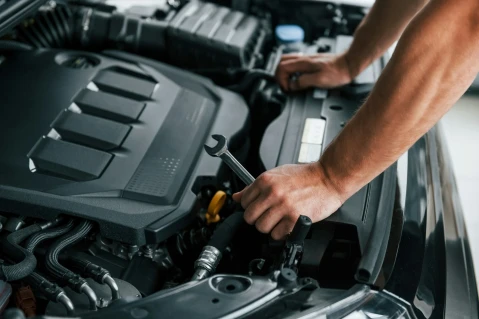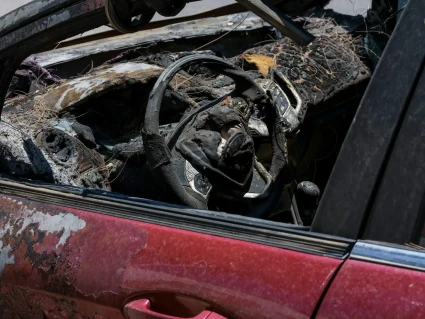

A Certificate of Destruction applies when a vehicle is declared non-repairable under state law, meaning it cannot be rebuilt, retitled, or legally driven again. A Salvage Title applies when a total-loss vehicle is still repairable and may return to the road after documented repairs and a state inspection. In short: COD = permanent retirement, Salvage = rebuild allowed.
When Is a Certificate of Destruction Mandatory?
A COD is used when a vehicle is deemed unsafe to return to public roads. States use this certificate to prevent fraud and protect the buyer. It is a legal document issued by the Department of Motor Vehicles when the vehicle is beyond repair, and the record must be closed. The decision often follows a total loss claim or a dismantler report. Once issued, the vehicle cannot be legally restored for normal registration.
Common situations that trigger a certificate of destruction include:
- Severe structural collapse where measurements can’t be restored.
- Fire damage with heat-weakened metal and wiring failure.
- Biohazard or chemical contamination.
- Stripped theft recovery that was sold for parts before recovery.
- Direct intake at a licensed recycling facility.
- The owner tries to abandon the vehicle, and the state requires destruction paperwork.
Many states set total-loss thresholds near 60-80% of the pre-loss value.
When Does a Salvage Title Still Allow a Rebuild Path?

First of all, this is possible when the damage is repairable. The unit should pass inspection, and the state can provide a rebuilt process. For example, the New York DMV requires owners to submit receipts for all major components, provide a completed MV-83SAL form, disclose donor vehicle VINs, and present the car for a full Salvage Vehicle Examination to confirm that no stolen parts were used and that structural repairs meet safety standards. If you see a salvage title on a car, confirm that it can be legally operated. Make sure that you can obtain a replacement title after the required steps.
How State Laws Affect Whether You Get a COD or a Salvage Title
State law controls whether the final label becomes salvage or a certificate of destruction. Some states allow rebuilt branding for many losses, while others destroy eligibility for flood, fire, or severe theft cases. Examine how a vehicle title is processed. Also, review how liens are handled and whether a sale can be public or private. Always check your state guide. Two similar vehicles can end up with different labels.
State-law details that commonly change the outcome include:
- The percentage threshold is tied to retail value today and market value.
- Language stating the vehicle is considered a total loss at that percentage.
- Whether the insurer must notify the DMV within a strict window.
- Whether rebuilt branding is allowed after a post-build check.
How Insurance Companies Decide: ACV, Damage, and State Thresholds
Insurance companies start with ACV (actual cash value), then compare it to the estimate plus add-ons like storage. They also look at hidden damage found after teardown, because supplements can change the decision. If the cost of repairs crosses the threshold, the claim moves toward salvage or a certificate of destruction. When the math is close, insurance may lean conservative to reduce liability.
| Factor | What it is | Why it matters |
| ACV | Pre-loss pricing for similar automobiles | Sets the financial ceiling |
| Hidden damage | What teardown reveals | Can add a major issue that flips the decision |
| Add-on costs | towing, storage, fees | Pushes the total higher |
| State threshold | Legal percent line | Determines which title path is allowed |
Which Damage Types Lead to COD Instead of Salvage?

The key difference lies in whether safety and contamination risks can be controlled with standard methods. Can a vehicle be reliably returned to safe road use? If no, the system uses a COD to end eligibility. That is why the types of branded titles exist: they signal the risk category, not just price. Salvage is more likely when the structure can be measured, and electronics can be verified, while COD follows when proof is unrealistic.
Damage patterns that often lead to a certificate of destruction include:
- Full-length frame buckling or suspension pickup point shift.
- An engine bay fire burned insulation, sensors, and connectors.
- Saltwater flood reaching modules with fast corrosion risk.
- Severe rust-through creating a safety defect in load-bearing areas.
- VIN tampering concerns after theft recovery.
- A catastrophic wreck leaving only salvage value.
Understanding Your Vehicle’s Actual Condition
Before you accept any label, verify what is bent, what is cosmetic, and what systems still operate. On-site test results indicate the true condition.
Signs That Your Car May Still Qualify for Salvage-Rebuild
A salvage-rebuild case works best when damage is limited. It should be supported by receipts that prove what was replaced. Start with structure, then safety systems, then electronics checks. Next, compare the estimate to the threshold and confirm parts availability. If you purchased a vehicle at auction, match the images that the seller provided to today’s condition and spot new damage.
Use this checklist:
- Damage localized to bolt-on parts: Panels and lamps can be replaced without cutting the structure.
- No frame distortion: Measuring points match spec, so geometry can be restored.
- Airbags intact or single deployment: Limited SRS (supplemental restraint system) work reduces complexity and warning lights.
- Electronics are dry and functional: Modules communicate normally, avoiding repeat faults.
- No fire or corrosion: Heat and rust can turn an automobile into parts.
- Repairs estimate within salvage threshold: Staying under the line keeps options open.
- OEM parts availability: Reliable sourcing limits delays and storage fees.
Financial Impact: How Each Title Affects Your Wallet
Title branding changes financing, premiums, and how easily you can register a vehicle. A lower price can help. However, delays, hidden damage, and paperwork costs can erase savings.
| Title Type | Resale Value Impact | Insurance Options | Registration Eligibility | Typical Extra Costs |
| Salvage Title | Reduced by ~20-40% compared to the clean title | Limited coverage until rebuilt | Allowed after passing the rebuilt inspection | Inspection fees, additional repairs, paperwork |
| Rebuilt Title | Higher than salvage but below clean title | Often eligible for liability + sometimes full coverage | Fully registrable | Parts receipts, certification fees |
| Certificate of Destruction (COD) | $0 resale value (parts-only) | Not insurable | Never registrable | Towing, dismantling, and administrative disposal fees |
How COD Eliminates All Future Resale Value
With a certificate of destruction, the vehicle is no longer eligible for registration in most states. A vehicle with a certificate of destruction can be sold only as parts or scrap metal through licensed channels. It is not legally driven on public roads, and the resale value is effectively zero. For example, a 2017 Honda Accord worth $9,000 clean typically sells for less than $400 as a COD unit. Even high-value models like late-model trucks or SUVs are reduced to scrap pricing once branded non-repairable.
When Keeping a Salvage Vehicle Saves Money
Salvage can save money when you control the work, and the damage is straightforward. Savings disappear when storage drags on, or estimates rise after teardown. Confirm the vehicle was insured at the time of loss. In this case, coverage does not become an issue. Pull a vehicle history report and match it to the damage you can see.
Salvage is more likely to be a smart choice when:
- You can do some labor yourself, lowering the cost to repair.
- The damage is mostly cosmetic, and the structure is straight.
- You have receipts and photos that make the paperwork legitimate.
- A towing company can move the car quickly, limiting storage charges.
Rebuilt-title automobiles often sell for 20-40% less than similar models.
What Happens After Each Path: Rebuilt, Junk, or COD

After the decision, each route has different paperwork and timing. A rebuilt path focuses on restoration and a formal state check. A junk route usually means the yard will take apart the vehicle and close liens under a junk title. A certificate of destruction route ends registration rights and shifts the unit to recycling. The table below shows the practical differences.
| Path | Required Next Steps | Typical Timeline |
| Rebuilt - return to the road with the brand | Complete restoration, receipts, state check, and apply for a rebuilt salvage title | 2-8 weeks |
| Junk - dismantling under a junk title | Clear liens, surrender plates, dismantle, and report disposition | 1-3 weeks |
| COD - permanent retirement | Surrender title, record disposal, route to recycler | 3-10 days |
How to Challenge or Verify Your Title Classification
If the label seems wrong, compare it to a car with a clean title and prove the error in title status with photos. To reverse a certificate of destruction, obtaining a court order helps if the agency agrees to reverse. To strengthen your challenge, focus on these three key steps:
- Document mismatches clearly: Show inconsistencies between the insurer’s assessment and the vehicle’s actual condition.
- Provide alternative evidence: Submit a corrected ACV, an independent repair estimate, or expert statements that the vehicle is repairable.
- Escalate through formal channels: Send a written dispute, request a supervisor review, and, if necessary, involve your state’s Department of Insurance.
How to Request a Second ACV or Damage Assessment
Request the valuation report, then verify trim, mileage, options, and condition adjustments. If errors exist, ask for a second ACV and a fresh damage estimate based on teardown notes. Put requests in writing because solid documentation supports a review and a corrected settlement document. One example is the Texas Department of Insurance, which explains that consumers may challenge a total-loss calculation, request the adjuster’s written valuation, and submit their own evidence for reconsideration.
What Should You Do Before Agreeing to COD or Salvage?
Before you sign, confirm the math, the rules, and the timeline. Ask where the vehicle will be stored. Verify how fast fees rise. Finally, find out whether you must hire a tow. Plan to rebuild another vehicle with donor parts? Confirm traceability and local regulations. To stay organized, follow these steps:
- Run a VIN decoder to confirm build data and prior branding.
- Review the estimate and flag each issue you dispute.
- Get an independent measurement check; note any fault.
- Confirm who clears liens before any transfer of ownership.
- Ask the yard what they pay for scrap. Verify how scrap metal is graded.
- Compare the current retail value to comps and negotiate if needed.
- Save receipts and photos as your documentation packet.
Key Takeaways
- A Certificate of Destruction legally ends the vehicle’s life. It cannot be rebuilt, retitled, insured, or returned to the road.
- A salvage title still preserves a path to road use. With proper repairs and a state inspection, you can earn a rebuilt title and legally operate the vehicle again.
- The COD vs Salvage outcome depends on ACV, repair cost, and your state’s total loss threshold. This formula determines whether the vehicle is repairable under the law.
- Some damage categories almost always trigger COD. Severe frame collapse, deep flooding, major fire damage, or contamination usually make the vehicle non-repairable.
- Before agreeing to any title classification, verify the numbers. Double-check ACV, the repair estimate, threshold percentage, and whether your state mandates COD for certain losses.
- Financial outcomes differ sharply. COD has zero resale value and no future utility. Salvage keeps options open for repair, resale, and insurance.
- If something appears inconsistent, request a second ACV/damage assessment and check the title history.
Frequently Asked Questions
Removing a VIN plate from a certificate of destruction case is tightly controlled. A licensed recycler may handle it for records. A private owner usually can't do it legally.
Liens must be cleared before final disposal. Often, the insurer pays the lender during settlement, but the owner should verify the lien release in writing to prevent a processing issue.
Yes, catalytic converters remain regulated due to theft and emissions rules. Many states require licensed buyers and traceability, even when the rest of the vehicle is headed to recycling processing.
Yes. Thresholds, prohibited loss types, and verification rules vary. One state may allow salvage rebuilding. Another will deem the same damage ineligible.
No. Light freshwater exposure below electronics may be salvageable. Saltwater or deep submersion often becomes a certificate of destruction because corrosion appears later.