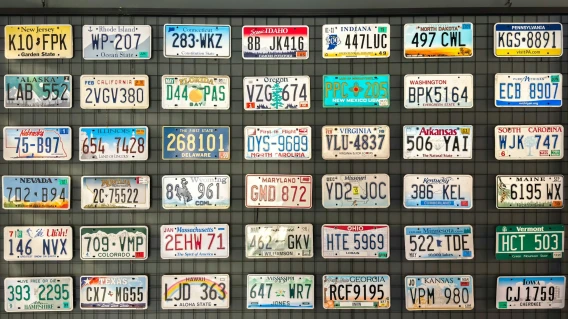

Someone getting your license plate number usually cannot access your name, address, or DMV records because the Driver’s Privacy Protection Act (DPPA) and state DMV rules restrict that data. The real risk is administrative misuse, like plate cloning that leads to tickets or toll charges you didn’t create. In most cases, it’s a fixable bureaucratic issue, not a personal-safety threat.
What Information Can You Get from a License Plate?
A license plate is a motor vehicle's external identifier. On its own, it does not show your name. It also does not reveal home addresses or phone numbers. Most of what strangers learn comes from context. This is where the car is parked, what it looks like, and what they can see through the glass. Getting personal data from state systems is restricted, even if someone tries to use your license plate number as a shortcut.
If you’re shopping for a used car, you may pair a plate with a vehicle history report. This may help cross-check ownership events and title flags. However, information from your license plate is not the same as a verified identity profile. In practice, most casual searches only return basic information like vehicle style, not the owner.
Here’s what can realistically be inferred or obtained:
- Vehicle make/model/year and visible trim clues.
- State of issue and plate type (passenger, commercial, specialty).
- Whether the plate “matches” the visible car (color/body type).
- General history indicators, when linked to a paid database or vehicle history report.
- Patterns if the same plate is repeatedly seen in one area (not a direct identity link).
The Real Risks If Someone Misuses Your License Plate

Misuse usually targets systems that accept plate data as proof. The most common harm is administrative: wrong tickets, bills, or calls you shouldn’t have to answer. This can happen if a bad actor copies your plate onto another car or swaps in old license plates to avoid attention.
Risk goes up when the cloned plate is attached to a similar vehicle, because cameras and clerks may assume it’s yours. That’s why license number problems are best treated as an error to correct quickly, not a mystery to chase online.
The most common misuse scenarios look like this:
- Plate cloning leading to toll violations or parking citations.
- False reports tied to a hit-and-run using your tag number.
- Attempts to “verify” an account with partial plate details in low-security systems.
- Harassment through repeated nuisance complaints.
- Confusion during insurance claims after a crash involving a clone.
When Someone Intentionally Photographs Your Plate
Sometimes it’s routine. A neighbor might document a blocked driveway. A store may note plates for lot security. Also, a bystander might say they took a picture after a close call. Just make sure that you didn't receive any notice later. One photo is usually not a threat.
The Laws That Protect Your Personal Information
In the U.S., federal law limits how states share driver and vehicle data. The Driver’s Privacy Protection Act (DPPA) restricts disclosure of personal data from state motor vehicle files and sets penalties for misuse. Other laws also limit access to driver information. For example, many states follow FOIA exemptions that block the release of driver records. California’s SB 34 sets strict rules for how ALPR data can be collected and shared. Virginia has similar limits under its Government Data Collection and Dissemination Act. These protections further reduce what someone can learn from your plate.
What Does the DPPA Cover?
In plain terms, authorized parties may use limited data for specific reasons, while broad release is restricted:
- Limits the release of identifying data from DMV records.
- Allows listed uses under the law.
- Creates penalties for improper access or misuse.
When You Should File a Police Report or IC3 Complaint

If you’re only uneasy because someone saw your plate, a report is usually unnecessary. But if you receive citations for places you weren’t, or your plate is missing, act fast. A stolen license plate can trigger ongoing notices because many systems assume the plate equals the owner of the vehicle.
A police report creates a time stamp that helps agencies reverse charges. If the situation feels like a coordinated scam - threats, payment demands, or a sense of urgency - an IC3 complaint can help document the pattern.
The FBI’s 2024 Internet Crime Report compiled 859,532 complaints, showing how common coordinated scams have become.
File promptly if any of the following happen:
- You get tickets in cities you haven’t visited.
- You find your plate missing or swapped (possible stolen license plate).
- An insurance company contacts you about an accident you didn’t have.
- You’re contacted by private investigators asking for payment or details.
- You receive threats by phone or email tied to your plate number.
How to Detect, Confirm, and Respond to License Plate Cloning
Cloning often shows up as surprise bills, not a face-to-face confrontation. If charges don’t match your location or schedule, treat it as possible license plate fraud and begin collecting proof immediately. Acting early prevents repeat notices and avoids escalation that would drain your time. For example, many drivers first notice cloning when they receive a toll charge from a highway they’ve never driven or a parking ticket from a city they haven’t visited.
How Plate Cloning Differs from Duplicate VIN Issues
Plate cloning copies what’s visible on the outside of a car. VIN issues are deeper because the vehicle identification number is tied to the title, theft checks, and inspections. A vehicle identification number is intended to be unique and tied to the title, theft checks, and inspections. Some cases involve simple paperwork errors. Others involve VIN cloning, where criminals copy a valid identifier onto a stolen car to make it look legitimate.
Inspections rely primarily on the VIN stamped on the vehicle itself. If a dispute involves a VIN number mismatch, it can block registration or trigger investigations.
| Issue Type | What’s Copied | Typical Symptom | Who Usually Flags It | Common Fix |
| Plate cloning | The license plate number | Tolls/tickets you didn’t earn | Toll agency, parking authority | Dispute + DMV flag on plate |
| VIN mismatch | Vehicle identification number | Title/registration holds | DMV, dealership, inspectors | Inspection + title correction |
| “Duplicate VIN” error | Data entry | The system shows the wrong vehicle | DMV staff | Administrative correction |
| VIN cloning | A real identifier reused on another car | The title looks “clean,” car isn’t | Police, insurers, inspectors | Seizure risk + investigation |
What To Do Immediately If You Suspect Plate Fraud

Speed matters because automated systems keep billing until the chain is stopped. Your goal is a clean timeline and a paper trail that agencies can verify. One clear photo of your own vehicle and plate, plus any notices, can become the backbone of your dispute; that would make the conversation with agencies faster.
Use this checklist to respond:
- Document everything (tickets, screenshots, letters): Save every notice and screenshot, and record dates and reference numbers.
- Check ALPR evidence if available: If a city used cameras, request images showing the vehicle. A mismatched make/model supports your dispute.
- Contact issuing agencies: Call the toll/parking office listed on the notice and ask what proof they accept.
- Notify the DMV of a possible clone: Ask for a flag on your plate and guidance on replacement plates.
- File a police report if recommended: A report often helps agencies reverse charges faster and shows you acted promptly.
- Monitor for new notices for 30 days: Keep a folder and watch mail/email. You'll be able to respond before late fees hit.
If your state offers anti-fraud monitoring for registration or plate reissues, enroll while you’re cleaning this up.
How to Dispute a Ticket or Toll Charge That Isn’t Yours
Disputes are won with specifics: where you were, what your car looks like, and why the notice doesn’t match reality. Many agencies have standard processes for plate disputes, even if the first letter is harsh.
Some drivers search for a license plate lookup site as a shortcut. However, most legitimate systems will not disclose personal details to people you don't know, and search results can be incomplete or wrong. The better approach is formal documentation with the issuer, plus proof that your vehicle doesn’t match the camera image.
Follow these steps:
- Collect your notice and any photos from the issuer (request images if not included).
- Provide proof you weren’t there (work timecard, receipts, or travel logs).
- Provide proof of your vehicle (registration and current photos showing distinguishing details).
- Ask what license plate lookup method they used and whether the image shows a different vehicle.
- Include any police report number and request a hold on collections during review.
- If denied, escalate in writing and ask for the supervisor process or administrative hearing.
Financial Impact of Plate Misuse
Most costs are indirect: time off work, certified mail, and hours spent on hold. Some toll agencies add late fees quickly, and parking authorities may boot or block registration if you don’t respond. The good news is that once a clone is confirmed, charges are often reversed, and corrected notices can be issued.
In 2024, the FTC logged 6.5 million consumer reports across fraud and identity theft categories. This shows how often people end up untangling administrative messes.
What Scammers Cannot Do With Your License Plate
A plate number feels personal, but it is not a master key. Most scary claims assume criminals can freely pull state files like a search engine. In reality, the fact who owns this car by license plate is not the kind of information people can reliably obtain through official channels, because DPPA rules limit access to your personal data from government databases.
Here’s a reality check:
| Claim/Fear | Myth or Reality | Explanation | What Actually Happens Instead |
| “They can find my home” | Mostly myth | DPPA limits the disclosure of home addresses from DMV systems to authorized uses. | A scammer may message you pretending to know you, hoping you volunteer details. |
| “They can steal your identity” | Usually myth | A plate alone doesn’t contain a social security number or financial credentials, so it’s a weak starting point to steal your identity. | Real identity theft usually uses breached data, not plates. |
| “They can get my criminal history” | Myth | Criminal records aren’t unlocked by plate-only searches. | They may bluff to scare you into paying. |
| “They can impersonate me at the DMV” | Mostly myth | Replacing plates or changing registration typically requires ID checks and paperwork. | The bigger risk is plate cloning on another vehicle. |
| “They can contact the owner instantly” | Myth for the public | Contact data is restricted; private investigators need a permissible reason and a legal process. | A tow yard or police could facilitate contact in limited cases. |
If someone claims they can instantly pull personal information from a plate, treat it as a red flag and keep your details out of the wrong hands. Plate exposure is real; instant identity access is mostly marketing.
How Plate Exposure Interacts With Stalking Risk
Most stalking doesn’t start with a plate, but plates can become a tool when combined with persistence and other data. A front license plate can make it easier to capture the number quickly. This is particularly relevant in states that require it. In higher-risk situations, the danger usually comes from repeated in-person encounters and location tracking, not a one-time sighting.
Practical steps that reduce risk:
- Park in well-lit areas with cameras when possible.
- Avoid posting routine locations on social media posts.
- If you share a car photo, redact the plate and nearby landmarks.
- If threatened, seek legal advice and ask about a free consultation with a local law firm.
Key Takeaways
- Most plate visibility is normal and perfectly legal in daily driving a car. The key is knowing what someone does with your license in reality, and what is exaggerated.
- Using just a license plate rarely gives a stranger access to your personal information through DMV systems under federal law.
- It’s unlikely a random person can pull the registered owner or home address from the DMV without a permitted purpose.
- If you receive a ticket you didn’t earn, document it. Dispute it promptly and contact the DMV to flag a possible clone.
- If your plate is missing, report it quickly and replace it; plate misuse can hit vehicle owners with repeated notices.
- The law restricts the disclosure of license plate information from motor vehicle records, so most “instant lookup” claims are exaggerated.
- Plate cloning can cause toll and parking problems, but personal data privacy is usually intact if you avoid oversharing online - stay safe.
Frequently Asked Questions
Not automatically for every car, but police could run plates during a stop, an alert, or a specific call. Running your license plate is typically tied to a reason.
Your plate is visible in public, but personal details behind it are not public records for casual browsing. DPPA rules prohibit broad disclosure.
Usually, no. An insurance company needs verified identity details beyond a plate number. The more common scam is fake billing, not real policy creation.
Yes. Temporary tags can show extra identifiers that connect more easily to paperwork. If you’re asking, “Is it bad to post your license plate online?” the safest step is to hide your license plate or blur it.
Yes. A cloned plate can generate charges far from you because cameras read plate numbers, not the driver. Respond quickly with proof and dispute paperwork.
It’s usually not illegal, but it can invite nuisance contact or copycats. If you upload vehicle photos, crop, blur, and avoid location clues.
A plate alone doesn’t provide live tracking or a direct path to contact the owner. If you want to know how to run license plates, understand that official access is restricted. Online services for the public are often limited or misleading.