
To avoid VIN cloning, match the VIN in every physical location on the car. Then, verify it in official title/theft databases and cross-check all paperwork for consistent color/trim/ownership and mileage history. If any detail conflicts, pause the deal. Verify at the DMV or with law enforcement before paying.
What Is VIN Cloning and Why Is It a High-Risk Fraud?
Thieves copy a real vehicle identification number from a legitimate car. They apply that identity to a stolen vehicle. Some thieves steal VINs from parked cars, then copy plates and labels to make the story look normal. In practice, criminals often use photos from ads to speed this up. The goal is to resell the vehicle quickly - often on online marketplaces. Order a vehicle history report; read it carefully.
Why it’s high risk:
- Built to sell stolen inventory.
- Can hide outstanding loans and past damage.
- Authorities can seize the vehicle even if you paid.
- You can inherit tickets and camera bills.
In 2023, 1,020,729 vehicles were reported stolen in the U.S.
VIN Cloning vs VIN Tampering vs Odometer Fraud
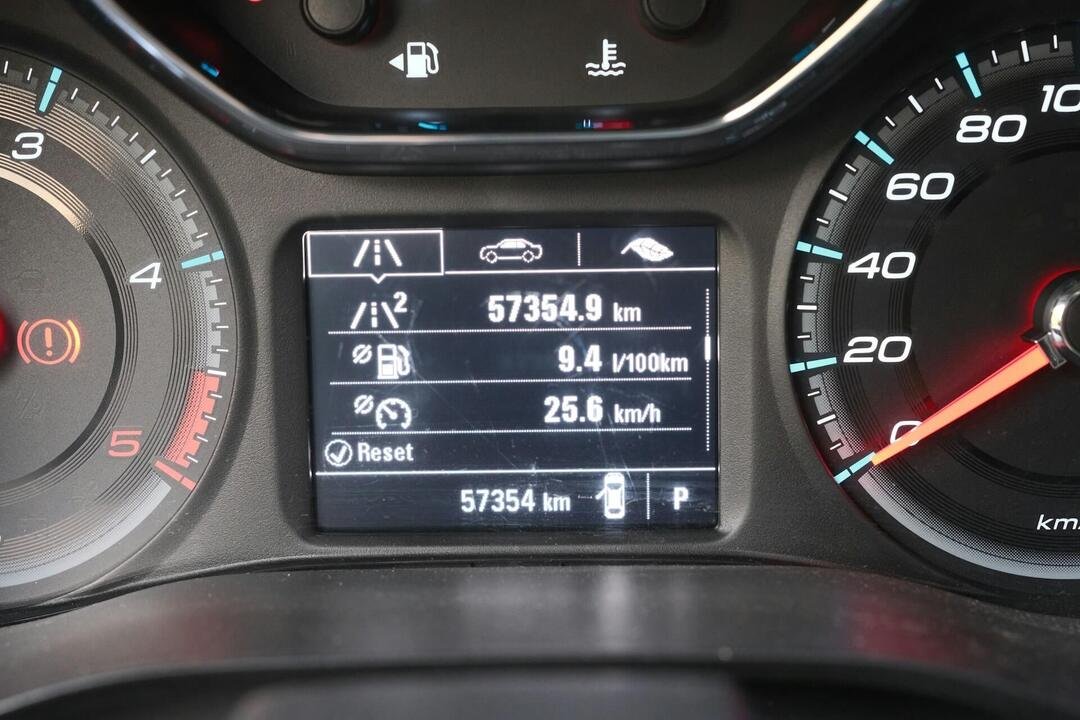
VIN scams come in different forms, and they don’t all create the same risk. Cloning copies an identity, tampering alters physical markers, and odometer tampering manipulates mileage. Use the table to separate what you’re seeing from what you’re assuming.
| Fraud Type | What It Involves | Typical Signs | Risk Level for Buyers | Legal Consequences |
| Cloning | Copy a clean VIN so records show identical VINs | Records don’t fit color/trim | High | Felony |
| Tampering | Modify plates, labels, or stampings | Mismatched fonts, adhesive residue | High | Felony |
| Odometer manipulation | Misstate mileage to raise price | Wear vs miles mismatch | Medium | Civil and criminal penalties under the Odometer Fraud Act (49 U.S.C. § 32703) |
How to Verify a VIN Properly
Confirm the physical VIN points. Validate databases and cross-check paperwork against what you can touch and measure. One check is never enough. A proper verification works only when each layer supports the next: the markings on the vehicle should reflect its build characteristics, the digital records should align with the vehicle’s documented history, and the seller’s explanation should make sense when compared to these details.
Locate All VIN Positions and Check for Physical Tampering
Most modern cars carry the VIN in multiple locations, and every location should agree. Scammers in the automotive industry may cover the VIN with tinted film, swap plates, or replace labels. Photograph each location, then compare every character to the title.
Key places to check:
- VIN on the dashboard at the base of the windshield.
- Driver door jamb label.
- Engine bay labels.
- Frame or unibody stampings.
- Trunk or spare-tire well labels.
Run the VIN Through Official Databases
Use a VIN decoder. Confirm the build details match the vehicle you’re inspecting. Then check the official title status and stolen-status directories, where available. If a result conflicts with the seller’s story, save screenshots. Ask for written proof before you register the vehicle.
Compare All Records for Identity Consistency
Compare sources that don’t “talk” to each other. Line up the title, inspection receipts, insurance, and the ad, then verify that each matches the vehicle in front of you, including any duplicate VIN activity. If the seller refuses documents, that’s a serious problem for any buyer.
Consistency checks:
- Color, trim, engine, and options must match across records and the vehicle.
- Mileage should rise smoothly across service and inspection entries.
- Ownership dates should align with sale dates and disclosures.
- Confirm that the same specific VIN appears consistently.
How to Verify a VIN for Cloning
Step 1 — Find all VIN locations
Check the dashboard, door jamb, engine bay, and frame areas to confirm each VIN marking exists and shows consistent aging.
Step 2 — Examine each VIN for tampering
Look for irregular rivets, fresh adhesive, scratched metal, or labels that don’t match the surrounding wear.
Step 3 — Decode the VIN
Confirm that the decoded year, model, and engine type match the vehicle’s actual equipment.
Step 4 — Check the VIN in official databases
Run the number through theft records, title databases, and vehicle history services to see whether all systems show the same identity.
Step 5 — Compare all documents to the vehicle
Match the VIN, mileage, color, trim, and ownership history across the title, receipts, and listing information.
Step 6 — Review component identifiers if available
Ensure the engine, transmission, and electronic module identifiers align with the expected build details.
Step 7 — Stop if anything doesn’t match
Any inconsistency between physical markings, database records, or documents is grounds to pause the purchase and investigate further.
State-by-State Differences in VIN Verification Laws
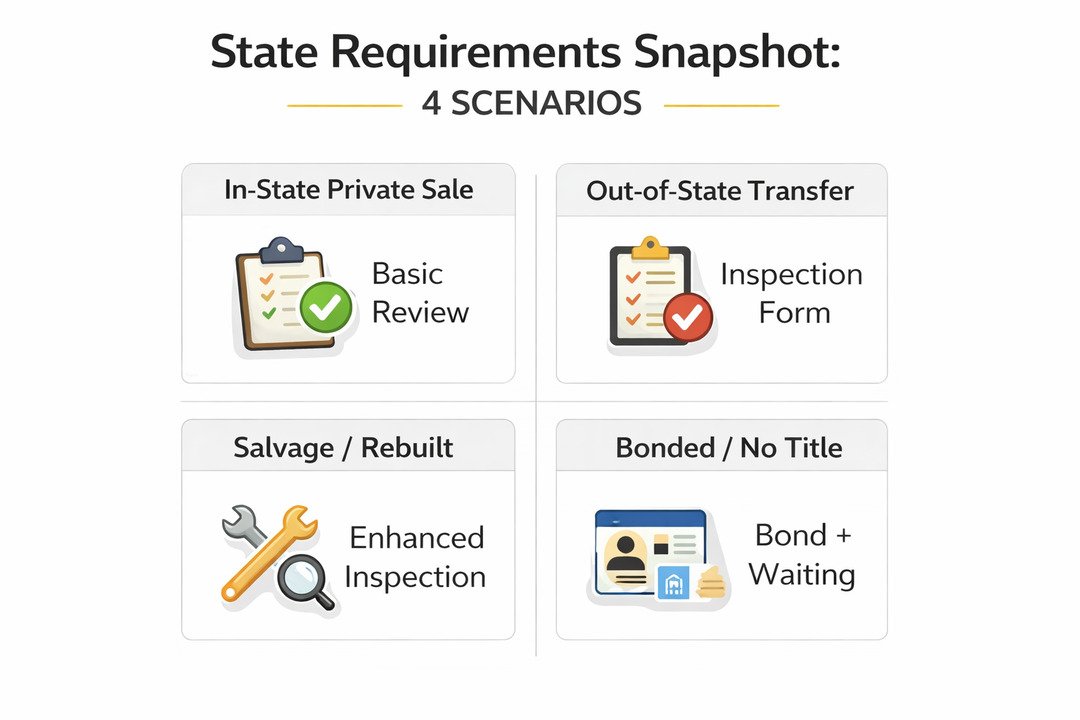
VIN verification isn’t handled the same way everywhere. Rebuilt titles and out-of-state transfers can trigger stricter checks. Call the motor vehicle agency in both states if the deal crosses state lines from another state. In this case, you'll end up with legally registered vehicles.
| Situation | Typical requirement | Practical impact |
| In-state private sale | Basic title and registration review; the office may check signatures, lien status, and whether the VIN is “clean” in the state system | Quick |
| Out-of-state transfer | VIN verification via state form or physical inspection; the clerk validates VIN format, plate integrity, and any prior brands | Adds time |
| Salvage/rebuilt title | Enhanced inspection of structure, weld points, VIN plates, component origins, and repair documentation | More steps |
| Bonded/no-title case | Title surety bond, ownership investigation, and mandatory VIN inspection | Delays |
Common Document Red Flags That Signal VIN Cloning Fraud
Many scams look convincing until you read the paperwork slowly. One mismatch can point to a forged title or a stolen identity. Keep copies of everything, because your paper trail matters. For buyers in states that require formal inspections, an official review can reveal issues that basic documents hide. For example, New York’s Salvage Vehicle Examination process shows how regulators verify whether a vehicle’s identity and documentation are legitimate.
Beware:
- Title corrections: Hand edits or correction fluid can hide changes to identity data.
- Inconsistent owner chain: Unexplained gaps can mask title washing or quick flips.
- Lien release anomalies: Missing signatures can signal liens that were never cleared.
- Wrong VIN format: A VIN should be 17-digit; odd spacing suggests a VIN swap.
- Altered fonts: Mixed printing styles can indicate a re-created document.
- Watermarks missing: Missing security features suggest the title was reproduced.
- Date gaps: Long gaps between sale and issue dates need a clear explanation.
- State mismatch in title history: “Bouncing” records can hide the origin.
- Duplicate titles: More than one “original” is a classic warning.
Technical Inspection Guide for Detecting VIN Tampering
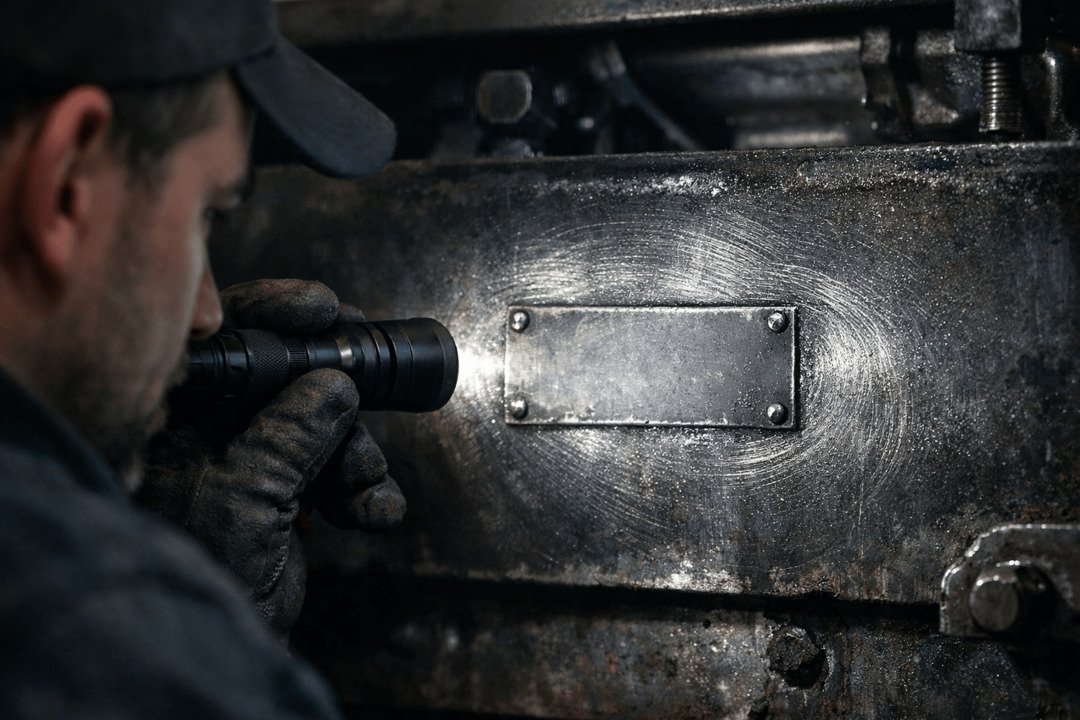
Use lighting, a small mirror, and close-up photos. Spot replaced tags, re-stamped metal, and swapped labels. It’s faster than solving the mess later. Get in the habit of examining edges, textures, and fasteners the same way a body shop would. Legitimate factory markings follow consistent patterns, whereas improvised fixes often exhibit subtle imperfections. Look for differences in aging between plates and surrounding panels, note any adhesive residue that seems too fresh, and pay attention to components that look newer than the rest of the area.
Component Serial Number Matching
Many autos have component serial numbers that should support the VIN story. When someone uses the wrong VIN number, supporting IDs often don’t fit the model year, factory, or drivetrain. Compare engine and transmission identifiers, then look at module labels for odd date codes. A criminal will try to distract you; stay methodical and confirm the car’s identity beyond the visible tags.
What to compare:
- Engine and transmission identifiers.
- ECU and airbag module labels.
- Option codes on the build sticker.
Factory Specifications vs Tampered Structures
Factory assembly leaves consistent marks that are hard to recreate. A car that’s been re-bodied/pieced together often shows clues in hidden areas. Look for uneven seam sealer, non-factory welds, and paint overspray. Consider checking bolt heads for disturbed paint and fresh tool marks.
| Inspection area | Factory look | Tampered look | What does it mean |
| VIN plate rivets | Uniform | Tool marks | Plate moved |
| Door jamb label | Flat edges | Lifting/bubbles | Label replaced |
| Frame stamping | Even depth | Ground/re-stamp | Identity altered |
| Panel alignment | Even gaps | Uneven gaps | Prior work |
Hidden Costs If You Accidentally Buy a Cloned VIN Vehicle
With a cloned vehicle, the real bill can arrive months after the sale. Even if the automobile drives well, ownership problems can surface. If the vehicle is listed for sale cheaply, the hidden costs can be brutal. This is why a careful routine is basic theft prevention.
Hidden costs to expect:
- Towing, storage, and legal fees.
- A fine for a camera-based violation.
- Bills tied to unpaid parking tickets and traffic violations.
- A denied insurance claim.
- Money is lost if the other party disappears.
What Happens If You Already Bought a Cloned-VIN Vehicle
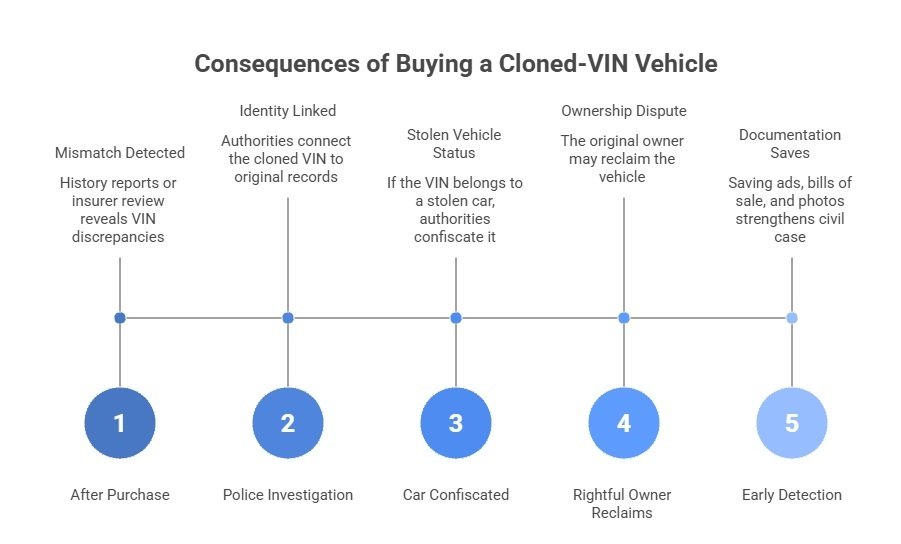
After you buy the car, the first sign is often a mismatch in history reports or an insurer review. Next, police investigations link the identity to original records. The car may be treated as a stolen automobile. If the identity belongs to a stolen car, authorities can confiscate it. The rightful owner, in turn, may reclaim it. You may need to prove ownership of the car and provide the relevant paperwork.
Early detection changes outcomes. Save the ad, bill of sale, and messages. Photograph each VIN location and keep brief shop notes. If the other party tried to fake a VIN number, your documentation strengthens your civil case. Report quickly and avoid modifying the car until it’s documented.
Dealer vs Private Seller: Which Option Reduces VIN Cloning Risk?
Dealers are not immune. However, many have compliance steps that lower risk and improve recourse. Private sales can work, yet risk rises when someone pushes a quick deal with minimal paperwork. Either way, insist on the original title and matching ID before payment. If it feels good to be true, verify again.
| Option | Typical strengths | Typical weak points | Risk-lowering move |
| Franchised dealer | More reputable process | Trade-ins hide issues | Disclosures + inspection |
| Independent dealer | Experience varies | Quality varies | Verify reputation |
| Private seller | Direct answers | Less accountability | Meet at the DMV |
| Unknown “flipper” | Fast cash | High chance of moving illegal stock | Walk away |
Summary
- VIN cloning can turn an ordinary used-car purchase into a long process of explaining mismatched records.
- The most reliable protection is a slow, methodical identity check: compare what the car physically shows with what its paperwork and databases claim.
- Fraud often hides in small details — subtle differences in build features, production dates, or ownership timelines that don’t fit the vehicle in front of you.
- Document every interaction and observation, from photos of VIN markings to messages with the seller, so you can demonstrate how the transaction unfolded if questions arise.
- A verified seller identity and a transparent payment trail strengthen your position in any dispute and make it easier for authorities or insurers to understand your role.
- When something feels rushed, inconsistent, or poorly explained, stepping back is usually the safest choice. Legitimate sellers won’t resist reasonable verification.
Frequently Asked Questions
Not always. Some scammers do clean work, so the car can look untouched. That’s why you should compare records and treat any mismatch as a red flag, even if panels and labels look neat.
Yes. Exported identities can be harder to confirm quickly, and some scammers use them to delay detection. Cross-checking official data and matching equipment to the car usually exposes the conflict.
Salvage yards can be part of the parts-and-paper trail. They may help criminals:
- Source donor shells and labels that look authentic.
- Provide paperwork that “explains” swapped components.
- Strip a stolen vehicle quickly and move parts into the supply chain.
No. Many offices rely on paperwork and a basic check, so a clean-looking title can pass. Cloning is often detected later through camera bills, mismatched records, or insurance review.
Small issues are often early warnings. To protect yourself:
- Pause the deal and take detailed photos.
- Ask for matching service records and ID.
- Get an independent shop to verify numbers.
- Walk away if you're under pressure during the deal.