
A free ATV VIN check helps confirm the ATV’s details (make/model/year) and may reveal theft or salvage records and open recalls if they’ve been reported. Before you buy, match the VIN on the frame to the seller’s paperwork, then run it through a VIN decoder and an official stolen-vehicle check. It takes a minute, but it can save you from expensive surprises and help you get the right parts later.
How to Do a Free ATV VIN Check (Step-by-Step)
Use the VIN, a flashlight/phone light, Internet access, and the seller’s paperwork.
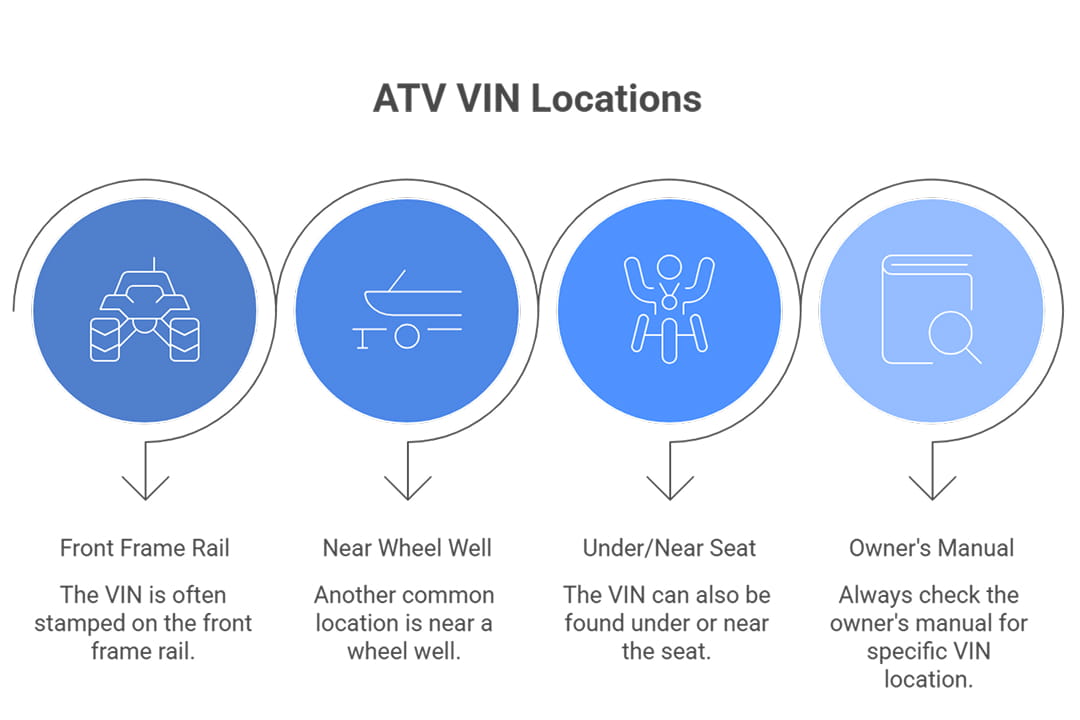
- Locate the VIN on the ATV frame (front frame rail, near a wheel well, or under the seat - varies by brand).
- Check for tampering. This concerns grinding, uneven characters, fresh welds/paint.
- Match the VIN to the paperwork.
- Run a free VIN decoder to confirm basic specs (make/model/year).
- Run a free stolen check (start with NICB VINCheck).
- Check for open recalls via the manufacturer and official recall resources.
- If the VIN looks missing/altered or doesn’t match paperwork, pause the deal and verify with the appropriate authority, such as your local DMV/vehicle registration office, state police, or highway patrol.
What Is an ATV?
ATV stands for All-Terrain Vehicle. This is a compact off-road machine. It’s built for varied terrain, usually with four chunky tires and handlebar steering. ATVs are used for trail riding, hunting, or farm work. Every machine is stamped with a VIN code.
- ATV (All-Terrain Vehicle): An off-road vehicle. It’s designed for varied terrain and commonly called a quad or four-wheeler.
- VIN (Vehicle Identification Number): A unique identifier. It’s used to verify ownership records, theft flags, recalls, and correct parts/fitment.
Different Types of ATVs
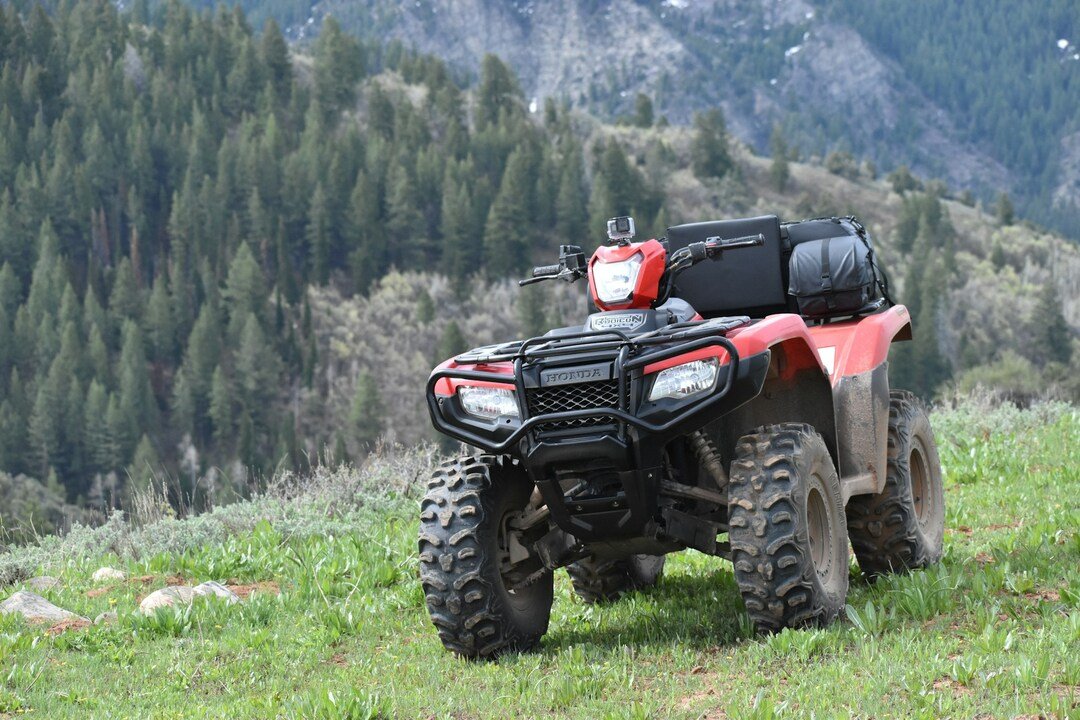
Not all ATVs are built the same. Utility/work ATVs often have racks, stronger bumpers, and skid plates. They’re designed for hauling or rough daily use. Sport ATVs focus on power-to-weight and handling. They’re popular for dunes, trails, and track riding.
A VIN check is helpful. Remember: the vehicle’s trim, equipment, and modifications can affect value and parts compatibility.
Pros and Cons of Buying a Used ATV
Shopping for a used ATV can be a smart move. However, it comes with trade-offs.
Advantages:
- Save money: Used ATVs cost less than newer models.
- Understand the condition: Records and paperwork can reveal how the ATV was used and maintained.
- Get upgrades included: Prior owners sometimes add accessories that would cost extra on a new build.
Disadvantages:
- Miss hidden issues: Skipping checks can mean overlooking damage history or title problems.
- Risk stolen units: Some sellers try to move stolen machines - check the VIN in official databases.
- Expect maintenance: Used ATVs may need sooner service/parts replacement.
Do All ATVs have a VIN Number?
Most modern ATVs have a VIN stamped on the frame. Many modern ATVs use a 17-character VIN; exact practices vary by manufacturer and model. Older models, off-road-only builds, or heavily modified machines can be exceptions, and sometimes the marking can be hard to see under paint, rust, or repairs.
A missing VIN plate (or signs it was removed) is a serious red flag - treat it as a verification problem until you can confirm legitimacy through paperwork and the appropriate authority.
When to Look Up an ATV VIN Number

Looking up an ATV’s VIN is essential when you’re buying a used machine. It also assists in registering or ordering parts for a vehicle with an unclear background. Avoid purchasing stolen or incorrectly documented ATVs.
A VIN can also help you check safety information like recalls, depending on the brand and what databases apply to the product category.
Quick Checklist: VIN Red Flags
- VIN plate is missing, freshly replaced, or unreadable
- Characters look ground down, re-stamped, or uneven
- Frame area shows fresh welding/paint around the VIN
- VIN on the frame doesn’t match the paperwork
- Seller refuses to provide a clear photo of the VIN
Where to Find the ATV VIN Number
ATVs typically have frame-stamped VINs. However, the exact location depends on the manufacturer and model. Common spots: the front frame rail, near a wheel well, or under/near the seat. Also, review the owner’s manual.
VIN placement on UTVs (also called a side-by-side) varies by make and model. However, it’s often on the frame. The safest move is to check the owner’s manual. Running a UTV VIN check helps verify the UTV’s identity and paperwork.
ATV VIN Location by Brand (Quick Reference)
| Brand | Common VIN locations | Quick tip |
| Honda | Front frame bar (below front plastics); near left rear wheel | Check the frame rail under the front plastics |
Front frame rail under front rack; left lower rail in front of rear wheel | Look beneath the front rack/bumper area | |
Frame near left rear under fender; lower frame tube near front | Use a flashlight under the fender line | |
Left frame rail near front; sometimes near right front/rear wheel | Check both front and rear frame rails | |
Under seat, front frame rail; rear frame near wheel well | Lift the seat and inspect the frame stamp | |
Side of frame rail near front left or along lower frame | Wipe the lower frame rail clean | |
Arctic Cat | Rear frame rail; sometimes near front left wheel | Check rear rail first, then front left |
Exact placement varies by model - confirm in the owner’s manual.
How to Read an ATV VIN
Most modern ATVs use a 17-character VIN. Those characters represent specific characteristics. These are manufacturer, vehicle attributes, and model year.
The first three positions typically identify the manufacturer group and vehicle type. Positions 4–8 usually describe the vehicle attributes. The 9th character is a check digit. Digit 10 is commonly tied to the model year.
What year is my ATV? The 10th character is usually the model-year indicator. Nonetheless, it’s best to confirm the year using a decoder. Alternatively, apply the manufacturer’s documentation for your exact model.
VIN position | What it means |
| 1st | Country of origin |
| 2nd | Manufacturer code |
| 3rd | Vehicle type |
| 4th – 8th | Model, engine type, body style |
| 9th | Check digit |
| 10th | Model year |
| 11th | Plant location |
| 12th – 17th | Serial Number |

What a VIN Decoder vs. a Vehicle History Report Can Tell You
Our free report works as a VIN decoder: it helps confirm the ATV’s identity and basic specs (manufacturer, model family, model year, and key attributes). It’s a fast first screen, but it doesn’t guarantee a clean history or capture every event tied to the vehicle.
Our paid report is a vehicle history report. It combines signals from multiple official and partner data sources to give a deeper picture of the ATV’s background. Coverage depends on what’s available for that VIN and what channels report data for the vehicle.
Sources (examples):
- NMVTIS data (title/brand and related reporting)
- State and registry-based records (where available through approved channels)
- Auctions and sale events, including photos
- Service/maintenance and repair shop records (when participating partners provide them)
- Safety recall signals (when available)
Further reading
Takeaways (free official resources)
VIN decoding (basic identity/specs)
- EpicVIN VIN Check
- NHTSA VIN Decoder
Decode the VIN for basic identity/specs; for off-road models, coverage may be incomplete - confirm with the manufacturer when needed.
Theft/salvage indicators
NICB VINCheck (theft/salvage indicators).
NICB VINCheck can flag unrecovered insurance theft claims and salvage records (participating insurers; not law-enforcement data).
Title/brand reporting
NMVTIS consumer guide
Use NMVTIS for title/brand context (where reported/available for that vehicle).
Recalls (official + manufacturer tools)
- NHTSA Recalls
- CPSC Recalls (often relevant for off-road products).
Check open recalls in an official database, then confirm on the manufacturer’s recall page/tool.
Manufacturer examples:
- Polaris VIN search/recalls tool: https://www.polaris.com/en-us/off-road-recalls/
- Honda Powersports recalls (VIN/HIN search): https://powersports.honda.com/recalls
- Kawasaki recall/VIN search: https://www.kawasaki.com/en-us/owner-center/recalls
- Suzuki recalls (VIN support varies by region/product line): https://www.suzuki.ca/recalls
- Can-Am (BRP) off-road safety recalls (model/notice hub; VIN status may route via dealer): https://can-am.brp.com/off-road/us/en/owner-zone/safety-recalls.html
- Arctic Cat recalls/safety bulletins (VIN/serial checked via dealer): https://www.arcticcat.com/owners/recalls
Frequently Asked Questions
Find the VIN on the frame. Run a free decoder to confirm basic specs. Check theft status using official databases.
Run a stolen check using official resources. Match the VIN with the provided documentation. Don’t forget to verify with local authorities.
Most ATVs place the VIN on the frame. It’s often near the front frame rail, a wheel well area, or under the seat.
Polaris VIN location is commonly on the front frame rail. It may be beneath the front rack or on the left lower frame rail near the rear wheel area.
For ownership, theft checks, and most lookups, use the VIN on the frame. A “serial number” may appear in manuals or parts diagrams for identification, but it’s not a replacement for VIN-based checks.
Most modern ATVs have VIN numbers. Older/heavily modified machines may have missing or hard-to-find markings. Treat this as a red flag until verified.
A 17-character VIN is a standard sequence. If the VIN is shorter or looks unusual, confirm the model documentation. Verify with the appropriate authority before buying.
Don’t proceed with the purchase. A VIN mismatch can indicate paperwork errors or something more serious - verify with your DMV or local law enforcement.
The 10th character is the model-year indicator on most modern vehicles.
Most UTVs have a 17-character VIN. It’s similar to many other vehicles.