

A car’s ownership history can be checked by decoding the VIN through a vehicle history report, which lists the number of previous owners, their ownership durations, and the states where the vehicle was registered. Additional confirmation comes from DMV records, title documents, and registration papers that show each transfer and its date.
Why the Number of Previous Owners Matters
A car that has changed hands several times isn’t automatically bad, but patterns matter. Each owner may service a car differently, drive under distinctive conditions, and store it with varying care. That affects wear and tear, maintenance planning, and resale. When you’re buying a used car, the story behind the transfers helps you judge long-term costs. A trustworthy vehicle owner lookup won’t reveal identities, but it can surface trends worth reviewing before you commit.
- Frequent transfers can hide unresolved mechanical problems or rushed flips.
- Fewer owners usually mean steadier maintenance and easier paperwork.
- Rapid state moves can complicate compliance and emissions records.
- Long single-owner tenures often align with predictable servicing.
- Combined with service records, ownership details boost pricing confidence.
Across multiple market datasets, single-owner cars list for 5–10% more on average than comparable multi-owner units.
What Information About Car Ownership You Can and Can’t Access
Privacy rules limit personal data. However, you can still learn a lot about a car. You can check the count of owners, the dates when the title changed, and the jurisdictions. You’ll also see title brands that signal the condition of the vehicle, like salvage or flood. You won’t see the name or address of any previous keeper. Even so, knowing the ownership history helps you judge risks, budget repairs, and plan negotiations.
| Data Type | Can You Access It? | Best Source | Why It Helps |
| Count of owners | Yes | Vehicle history report, DMV | The best way to find out the number of owners within each period |
| Dates of transfers | Yes | Reports, title abstracts | Helps check the number of previous changes and holding times |
| States/regions | Yes | Reports/DMV | Different driving climates affect wear |
| Title brands | Yes | Reports/DMV | Flags salvage, rebuilt, lemon, key for condition and reliability |
| Previous owner names | No | — | Protected by privacy laws |
| Odometer entries | Yes | Reports/DMV | Confirms mileage trend; exposes rollbacks |
Legal Limits: Why You Can’t See the Previous Owner’s Name
Data-protection laws restrict personal identifiers. You can verify the count of past owners and registration jurisdictions, but you cannot lawfully view the previous car owner’s name or address without a permitted legal reason. This limitation is defined by the federal Driver’s Privacy Protection Act (DPPA), which prohibits disclosure of personal information from motor vehicle records except under specific legal conditions. These rules safeguard consumers from misuse and help evaluate a vehicle's history using non-personal records and timelines.
Step-by-Step: How to Check How Many Owners a Car Has Had
Start with the VIN. Enter it into a reputable car check tool, then compare the results with DMV data and paperwork to find out the owners accurately and quickly. Most ownership records are triggered by title transfers, so tracking these changes is key. Reliable reports will also show the duration of each ownership period.
Read a Vehicle History Report
A comprehensive vehicle history report is the fastest way to understand a vehicle's past. It aggregates titles, inspections, registrations, and odometer readings from multiple sources. Always compare results across providers if the car moved between states. If you need a full picture, get a vehicle history report and match it to physical documents. A car history report plus a mechanic’s inspection reduces guesswork when buying a car.
- Locate the VIN on the dash or door jamb and enter the VIN with the provider.
- Review ownership history lines and the number of previous registrations and durations.
- Check title brands, odometer entries, and accident notes; the report also lists recalls.
- Confirm reports include ownership timelines and jurisdictions for clarity.
- Correlate maintenance records to verify maintenance and save the PDF for negotiations.
Check with Your State DMV or Equivalent
Your local Department of Motor Vehicles can confirm the owner count and title status. Names remain hidden, but you can check dates, brands, and states. For a free car check snapshot, many states offer online verification portals. For example, New York DMV allows title and lien checks by VIN without disclosing personal information. This official route often surfaces entries that third-party databases might miss, especially for older used cars or vehicles that crossed several jurisdictions.
Examine the Car’s Title & Registration History
Paperwork validates digital records and can reveal gaps. Inspect the current title for brands and match the VIN exactly. Look for consecutive registrations in different states and reconcile dates with inspection or emissions certificates. Ask for maintenance invoices tied to the VIN. These previous car owner registration details tie the paper trail to the specific car and clarify prior transfers.
- Compare title issue dates to registration renewals and inspections.
- Confirm lien releases; unresolved car finance can disrupt transfer.
- Align mileage in maintenance records with report timelines.
- Note sudden state jumps that might require extra compliance checks.
Ask the Seller or Dealership Directly

A transparent private seller or dealership should answer questions about past owners. Also, they should describe the repairs and why they sold the car. Request receipts, warranties, and a written summary of disclosures. Verify that answers match documents and the history. If anything seems vague or inconsistent, pause. Check before buying again. Budget for an independent inspection so you get a car that truly fits your needs.
Ownership Red Flags You Shouldn’t Ignore
Some problems emerge only when you line up dates, mileage, and jurisdictions. If the car shows numerous transfers in a short time, ask why. A mismatch between recorded owners and the seller's story can point to title jumping. Cross-check accidents, emissions failures, and odometer jumps. Always compare the vehicle’s history against the physical state. When in doubt, avoid title washing schemes and walk away because the number of previous owners affects car value.
| Red Flag | What You’ll Notice | Why It Matters |
| Frequent flips | Short tenures, many previous owners | Unresolved mechanical problems or quick resales |
| State hopping | Rapid jurisdiction changes | Could mask inspections; avoid title washing risk |
| Odometer anomalies | Mileage drops or erratic jumps | Undermines trust and future resale |
| Salvage/rebuilt | Branded title present | Higher risk; deep inspection required |
| Sparse paperwork | Thin service records | Hard to judge the overall condition and wear and tear |
Listings with three+ ownership periods in five years tend to sell 18–25% slower and at larger discounts, per retail analyses.
Fleet, Lease, Rental, and Commercial Ownership
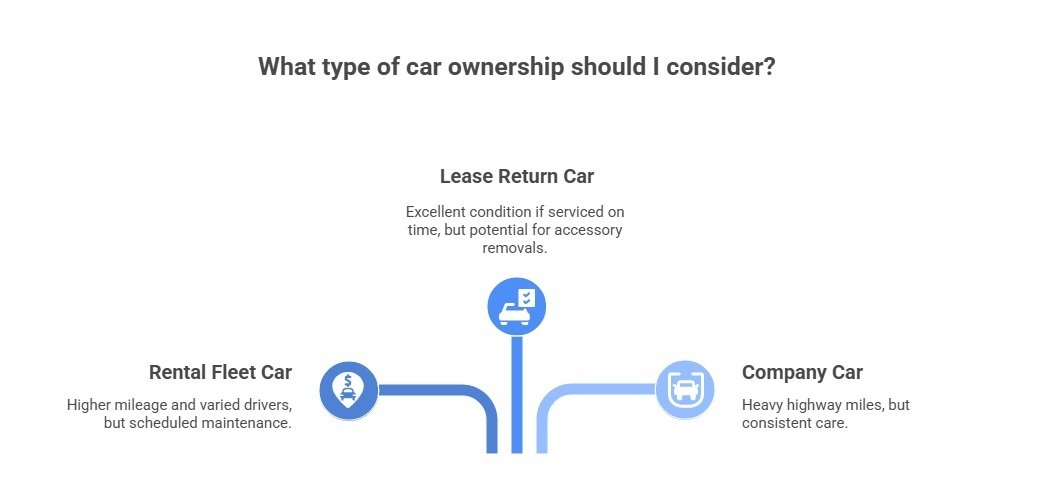
A car from rental fleets or commercial pools can have higher mileage and numerous drivers. Fleet cars often receive scheduled maintenance, but experience different driving styles. Lease returns may be excellent if serviced on time. Company cars might show heavy highway miles yet consistent care. Balance ownership details with the condition of the vehicle and documentation quality.
- Ask whether it was fleet, lease, or rental, and for how long.
- Verify maintenance intervals mandated by fleet programs.
- Check for police, taxi, or rideshare use disclosures.
- Confirm accessory removals were done cleanly and safely.
How Many Owners Is Too Many for a Used Car?
Single-owner and certified pre-owned vehicles often have clean paperwork and predictable maintenance. Still, older used cars with several transfers can be smart buys if documents are complete, the car’s history is transparent, and inspections are strong. That said, three or more owners within five years may signal a red flag, especially if ownership changes happened rapidly or without documented servicing. As a rule of thumb, more than one new owner every two years can indicate flipping, unresolved issues, or inconsistent usage. Vehicle owners have one powerful data point: an unbroken full-service history, and the context that ownership history provides can strengthen or weaken a vehicle’s value.
Buying vs Selling: How Owner History Impacts Your Strategy

Ownership data shapes negotiations. As a buyer, highlight short tenures, state jumps, or brands to price risk. As a seller, assemble documents so the next owner can quickly verify. A reliable VIN decoder and printed reports signal transparency. Use clarity when including the number of previous registrations to justify value, because the number of previous owners affects car value during offers.
| Scenario | Buyer Strategy | Seller Strategy |
| Clean, one owner | Bid near market; leverage stability | Advertise a single owner, show binder and timeline |
| Numerous short tenures | Reduce the offer; insist on inspection | Price competitively; explain prior transfers and repairs |
| Branded title | Demand a deep discount; an independent exam | Disclose early; provide invoices and photos |
| Cross-state history | Verify emissions/tests | Provide a dated jurisdiction map and records |
| Sparse records | Contingent offer; check gaps | Gather receipts and a summary report for confidence |
Summary
To find out how many owners has a car had, combine a report, DMV confirmation, and paperwork review. Use multiple sources, compare dates and mileage, and verify in person. When purchasing a used car, assess previous ownership alongside inspections and documents. Knowing the ownership history reduces surprises, supports fair pricing, and keeps risk in check. With clean documents and a sound inspection, the car is likely to serve you well.
Frequently Asked Questions
Joint owners don’t imply multiple sequential owners. Two people can be the current owners together, counting as one period.
- Lenders typically appear as lienholders, not owners.
- Estate or trust listings usually preserve the same period.
- Removing a spouse’s name may not start a new period.
- Confirm via a state title abstract.
Not necessarily. The owner of a car can move states without a transfer. Compare dates, odometer trends, and jurisdictions to check continuity.
Yes. A gift still triggers a title change if the vehicle changed hands legally. File tax exemptions if applicable and ensure liens are released.
Generally, no. Dealers and auctions handle inventory in transit; systems typically count retail registrants, not intermediaries between lots.
Usually, after title issuance or registration events, but some feeds lag by weeks. Cross-verify with a DMV abstract and a second report when timing looks tight.