An NC VIN lookup matches a 17-character vehicle identification number (VIN) against 8,182,076 VINs with North Carolina records to reveal reported risks. Start with a free preview for the unique VIN, then open a vehicle history report informed by NMVTIS records.
Where
to find the VIN?
Looking for the VIN?
Here is where you'll find it:
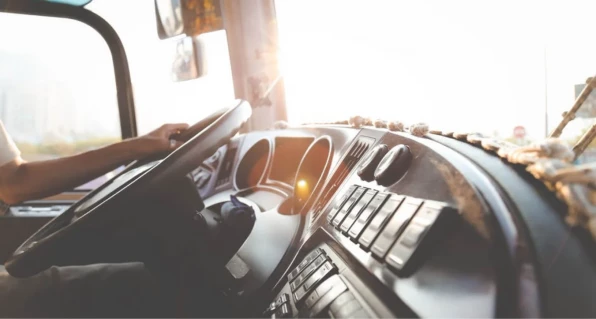
On the driver’s side dashboard near the windshield
North Carolina ranks 8th of 50 states for VIN records in EpicVIN.
EpicVIN searches more than 350 million VIN records and 70 databases, including NMVTIS (National Motor Vehicle Title Information System).
EpicVIN is an approved NMVTIS data provider. It covers the current state of the certificate of title and date, brands, last reported mileage, total loss and salvage history.
The free preview shows specs, recalls, odometer status and the number of accidents, sales and owners; see the full vehicle history report.
What a North Carolina VIN check shows
A complete vehicle history helps identify potential problems tied to one vehicle.
Title brands: Salvage Motor Vehicle, Salvage Rebuilt Vehicle, Reconstructed Vehicle and Flood Vehicle, plus lien records with lienholder details when available.
Salvage auction records: Auction accident history may describe damage type, including collision or water/flood.
Odometer readings help verify true mileage; an odometer rollback flag marks a drop against previous readings.
Recall campaigns filed for the model year with the National Highway Traffic Safety Administration (NHTSA), not repair status.
Insurance companies' records of vehicles sold at auction as theft loss, not current theft status.
Number of owners, changes of ownership, and records in more than one state.
A vehicle owner lookup by VIN reports counts and states, not identities. The federal Driver's Privacy Protection Act (DPPA) closes personal information in DMV records to the public. The North Carolina Division of Motor Vehicles (NCDMV) issues official records upon eligible written requests.
How to run a VIN lookup in NC
Step 1. To check a VIN in North Carolina, find it on the driver's side dashboard, door jamb, title or insurance card.
Step 2. To look up a VIN, enter the VIN online and select Check VIN. An NC VIN lookup starts with the basics.
Step 3. Review the free preview, open the report and consult our sample report.
The VIN decoder explains characters; a North Carolina VIN search adds the records.
Among the 8,182,076 VINs with North Carolina records, 20.3% show at least one problem in history, against 19.6% across all 50 states. Problems include salvage auction, salvage or rebuilt title, flood, fire, theft loss, odometer rollback or a Not-Actual odometer brand. The share of VINs showing a salvage or junk title on an auction lot or listing, not an official brand, is notably higher than across all 50 states.
19.7% appeared at a salvage auction, versus 18.9% across all 50 states; odometer rollback was 1.2% at both levels. Not-actual odometer reports and flood damage recorded on a salvage-auction lot were slightly below the all-50-states figure. See North Carolina title brands and total loss law.
North Carolina vs All 50 states share of VINs with records; recall campaigns as an average per VIN
Appeared at a salvage auction19.7%All 50 states: 18.9%
Salvage title16.1%All 50 states: 12.7%
Odometer rollback1.2%All 50 states: 1.2%
Recall campaigns per model year4.33All 50 states: 4.28
Top 5 damage types on North Carolina auction lots share of all VINs with North Carolina records
#1Collision15.2%
#2All Over0.7%
#3Mechanical0.5%
#4Water / Flood0.4%
#5Rollover0.4%
At least one problem in history
20.3%
VINs with North Carolina records that show at least one problem in history (All 50 states: 19.6%)
History flags: North Carolina vs All 50 states share of VINs
Indicators where North Carolina is 1.5x or more, or 3 percentage points or more, away from All 50 states come first; if fewer than three qualify, the next widest gaps (1.2x or more) complete the card. Bars are scaled within each pair.
Salvage title
North Carolina
16.1%
All 50 states
12.7%
Odometer reported as not actual
North Carolina
1.2%
All 50 states
1.5%
Flood damage
North Carolina
0.4%
All 50 states
0.5%
History indicators: North Carolina vs All 50 states
Indicator
North Carolina
All 50 states
VINs with records
8,182,076
232,695,729
At least one problem in history
20.3%
19.6%
Appeared at a salvage auction
19.7%
18.9%
Salvage title
16.1%
12.7%
Rebuilt title
0.1%
0.2%
Sold at auction as a theft loss
0.2%
0.2%
Flood damage
0.4%
0.5%
Hail damage
0.1%
0.3%
Fire damage
0.3%
0.3%
Odometer rollback
1.2%
1.2%
Odometer reported as not actual
1.2%
1.5%
Model year covered by an NHTSA recall campaign
80.1%
79.0%
Recall campaigns per model year (average)
4.33
4.28
Dated history records per VIN (average)
2.76
2.56
Shares count VINs with records in EpicVIN whose latest record is in North Carolina, not all cars registered in North Carolina (how we calculate). Records in more than one state: 20.2% (All 50 states 15.2%). The fleet profile of North Carolina records is on the North Carolina license plate lookup page.
Official North Carolina title and VIN tools
NCDMV has no online history search for other vehicles; MyDMV is NCDMV's online portal for vehicle owners, while other records require a request. The VINCheck service covers insurer data, NHTSA provides government tools, and NMVTIS providers supply title records.
NCDMV vehicle record: Form MVR-605A
Submit Request for Motor Vehicle Information (Form MVR-605A, Rev. 07/2/24) by mail or in person in Raleigh or Huntersville. Vehicle information costs $1.25 per individual record under North Carolina General Statutes (G.S.) 20-43.1(e1); a certified copy of title history costs $16.75 under G.S. 20-42(b). Select one of 14 DPPA exceptions. Improper release of this information and/or false representation to gain information is a Class 2 misdemeanor under G.S. 20-43.1. The NCDMV website says to allow 10 business days from the time of receipt.
Where to find your NC title number
The title number is a 15-digit document identifier, not a VIN. NCDMV issues a new number after owner/lienholder changes, duplicates or corrections, per the Title Manual. Find yours on the title, in MyDMV (owner login: NC driver license or ID, last four Social Security digits, birth date), or on the renewal notice (last 5 digits). Other people's numbers are private; EpicVIN reports title records.
NICB VINCheck
National Insurance Crime Bureau (NICB) VINCheck is free. It searches participating insurers for unrecovered theft or salvage/flood, with up to five searches per 24 hours per IP address. It excludes law enforcement records and nonparticipating insurers; results are not comprehensive.
NMVTIS consumer access
A federal U.S. Department of Justice title program, NMVTIS offers approved providers through its consumer page. Results are intentionally concise and may falsely show no junk or salvage history. Review auctions; liens, repairs and recalls are excluded.
NHTSA VIN Decoder
The NHTSA VIN Decoder identifies vehicle specifications; the agency also tracks recall campaigns, not individual title or ownership records.
NC DMV or EpicVIN: when to use which
The NC DMV handles paperwork; EpicVIN offers third-party research for buying a used car. A VIN report from EpicVIN joins NMVTIS, auction, odometer and recall records.
For purchase, seek NCDMV records or EpicVIN's title check. MyDMV shows your title number and registration details; EpicVIN counts unnamed owners. NICB covers insurance theft and salvage; EpicVIN shows theft-loss auctions. Neither replaces a VIN verification.
NCDMV handles registration, transfer, duplicate title requests and Title Application (MVR-1). See full report pricing after the preview for an informed decision.
Report Example
The preview introduces the vehicle; the full report organizes dated records and warnings.
2021 AUDI Q8
Year2021
MakeAUDI
ModelQ8
Fuel TypeGasoline
Engine3L
Made inSLOVAKIA
North Carolina title brands and total loss law
What counts as a salvage motor vehicle in North Carolina
G.S. 20-4.01(33)d. defines a salvage motor vehicle by collision or other damage whose repair and road-safe restoration would exceed seventy-five percent (75%) of fair retail market value, whether or not the motor vehicle has been declared a total loss by an insurer. Repairs include parts and labor. G.S. 20-71.3(h) excludes air bag restraint system replacement only for vehicles more than six model years old. G.S. 20-71.3(b) counts the six model years from manufacture year to current year. A total loss declared by an NC-licensed insurer requires "TOTAL LOSS CLAIM" on title and registration card and "TOTAL LOSS CLAIM VEHICLE" on the doorjamb under G.S. 20-71.3(a1). This permanent notation is not a brand.
North Carolina title brands
A branded title under G.S. 20-71.3(a) may carry Salvage Motor Vehicle, Salvage Rebuilt Vehicle, Reconstructed Vehicle, Flood Vehicle, Non-U.S.A. Vehicle and other authorized classifications. Salvage Rebuilt means rebuilt for title and registration; Reconstructed means materially altered by removing, adding or substituting essential parts, including glider kits or custom assemblies. Flood Vehicle means full or partial submersion damaging body, engine, transmission or differential. Titles read "Water/Flood Damage Vehicle"; registration cards, "WATR-FLD." Junk Vehicle is a class that shall not be titled or registered. Brands persist; out-of-state brands receive the nearest NC equivalent, except junk. The Title Manual lists odometer brands Not Actual Mileage (NAM), Exceeds Mechanical Limits (EML) and Odometer Not Certified (ONC).
Rebuilt salvage: two anti-theft inspections
G.S. 20-71.3(b)-(c) requires preliminary and final inspections before retitling damaged vehicles up to and including six model years old. These antitheft measures do not certify a rebuilt vehicle's safety or road-worthiness. The North Carolina State Highway Patrol Investigative Services Unit (ISU, formerly the DMV License & Theft Bureau) conducts them. Unbranded titling requires repair costs not exceeding 75% of fair market retail value; older vehicles may use a rebuilder affidavit without inspection. NCDMV retains repair affidavits for public salvage-history review and copying. NCDMV guidance advises ISU inspection before buying salvage.
Lemon law returns and resale disclosure
North Carolina's New Motor Vehicles Warranties Act covers new cars. Under G.S. 20-351.3(d), a manufacturer, its agent or its authorized dealer reselling a vehicle returned under this or another state's law shall disclose its return and defect to the subsequent purchaser before sale. Notified resellers must also disclose.
VIN verification in North Carolina: when an inspector's report is required
An ordinary titled out-of-state vehicle needs no VIN inspection for NC registration. VIN verification applies to antique out-of-state vehicles of model year 1980 or older and specially constructed vehicles. This checks identity, not history; EpicVIN cannot substitute. Separate safety and emissions inspection comes at renewal.
When North Carolina law requires a VIN verification
G.S. 20-53(e) requires verification before initial titling of qualifying out-of-state or specially constructed vehicles. For 1980-or-older vehicles, the public VIN must match the vehicle and ownership documents. After 15 days from a request without inspection, absent probable cause of mismatch, requirements shall be deemed satisfied and title shall issue. ISU examples that might require examination include out-of-state salvage, newer rebuilt salvage and gray-market imports. Branded out-of-state titles may need an inspector's report depending on title holder.
Who performs it and what to bring
Bring the vehicle and original ownership documents to ISU during business hours or request examination through its portal. The inspector's report goes to NCDMV with MVR-1. Willful VIN removal or alteration is a Class I felony under G.S. 20-109(a).
Buying a used car in North Carolina: what to check
Odometer disclosure
G.S. 20-347(a) says the transferor shall disclose mileage to the transferee in writing on the title or reassignment document, signed with a printed name. The transferor must certify whether the reading reflects the actual mileage, reflects mileage beyond the designed mechanical odometer limit, or does not reflect the actual mileage and should not be relied on. Use NCDMV's Odometer Disclosure Statement (MVR-180). G.S. 20-347(d) exempts model year 2010 or older; model year 2011 or newer transferred at least 20 years after January 1 of its designated model year; and vehicles with gross vehicle weight rating (GVWR) over 16,000 pounds. Altering an odometer's mileage is a Class I felony under G.S. 20-343 and G.S. 20-350. Compare readings.
Damage disclosure and curbstoners
Individual sellers and dealerships have legally required disclosures. G.S. 20-71.4(a)(1) covers vehicles up to and including five model years old when known collision or other repair costs, excluding air bag replacement, exceed 25% of fair market retail value. G.S. 20-71.4(a)(2) applies regardless of age when the transferor knows a vehicle is or was flood, reconstructed or salvage. The transferor must disclose in writing to the transferee prior to transfer. See Damage Disclosure Statement (MVR-181, Rev. 04/2026); violations are a Class 2 misdemeanor under G.S. 20-71.4(d). The North Carolina Department of Justice (NCDOJ) explains seller duties and warns of altered paperwork concealing flood damage. Auction records help, but the Federal Trade Commission notes a vehicle history report is not a substitute for an independent vehicle inspection by a mechanic.
ISU estimates more than 5,400 curbstoners in North Carolina. Signs: multiple listings, seller absent from title, refusal to notarize the bill of sale. Walk away if the VIN plate is missing, damaged or differs from the title; knowingly altering a VIN is also a federal crime (18 U.S.C. § 511).
Vehicle from another state
For an out-of-state purchase, the buyer needs the out-of-state title, Title Application (MVR-1) and odometer reading for the title transfer. Review the verification and brand rules before registering the used vehicle.
Save Thousands of Dollars
Learn everything there is to know about your next car.
North Carolina VIN Check: Frequently Asked Questions
No. The VIN is a permanent 17-character identifier; NCDMV issues a new document number after ownership or lienholder changes, duplicates or corrections. Both appear on the title.
Find it on your title, in MyDMV or on a renewal notice showing its last 5 digits. NCDMV keeps others' numbers private; EpicVIN shows title events.
Usually no. G.S. 20-53(e) covers 1980-or-older out-of-state vehicles and specially constructed vehicles; salvage cases may require additional ISU examinations.
No, NCDMV has no online VIN-history search for others' vehicles; MyDMV covers owners and Form MVR-605A handles paid requests by mail. EpicVIN, NICB and NHTSA offer alternatives.
Yes. EpicVIN offers a free VIN check preview, NICB covers insurer theft/salvage/flood, and NHTSA supplies specifications and recalls; full reports add title, auction and odometer records.
Repair costs above 75% of fair retail market value qualify regardless of insurer decisions. 19.7% of the 8,182,076 VINs with records in North Carolina appeared at a salvage auction.
Review NMVTIS for Salvage Motor Vehicle, Salvage Rebuilt, Reconstructed, Water/Flood Damage or Total Loss Claim. Missing junk or salvage records still warrant checking auctions.
No. DPPA protects names and addresses; reports show owner counts and states. NCDMV releases qualifying personal records through MVR-605A exceptions.
Yes. Select by US License Plate to retrieve the matching VIN and available records without typing the VIN.
Yes, if NCDMV brands a Flood Vehicle "Water/Flood Damage Vehicle." State law requires written disclosure; auction records can expose water damage without that brand.
Similar Articles
Discover expert tips, news and advice on buying and maintaining used vehicles
Learn everything there is to know about your next car.
We use cookies
. If you continue to browse it means you agree to the use of cookies. Learn more and change cookie settings
.
Choose your country or region
Switch to Global?
This version of EpicVIN isn't adapted for your region — Global. Data coverage and some features may not work as expected, and your experience may be worse. We recommend staying on your regional version.